A data centre invests six figures in aisle containment. Rigid panels, self-closing doors, roof sections, fire suppression review. The installation takes months of planning and phased execution across a live environment. The project closes. The PUE improves, but not by as much as the engineering model predicted.
The team rechecks the containment panels. Sealed. They verify the doors close properly. They do. They check the roof sections for gaps. Tight. Everything looks right.
Then someone crawls under the raised floor and finds the problem: dozens of unsealed cable cutouts punched through the floor tiles inside the contained aisle. Each one is an air leak. And collectively, they are bleeding enough cold air out of the contained zone to reduce the containment’s effectiveness by a measurable margin.
This is one of the most common and most overlooked failure points in containment deployments. The aisle is sealed at every visible boundary, but the floor is full of holes.
Where the Air Goes
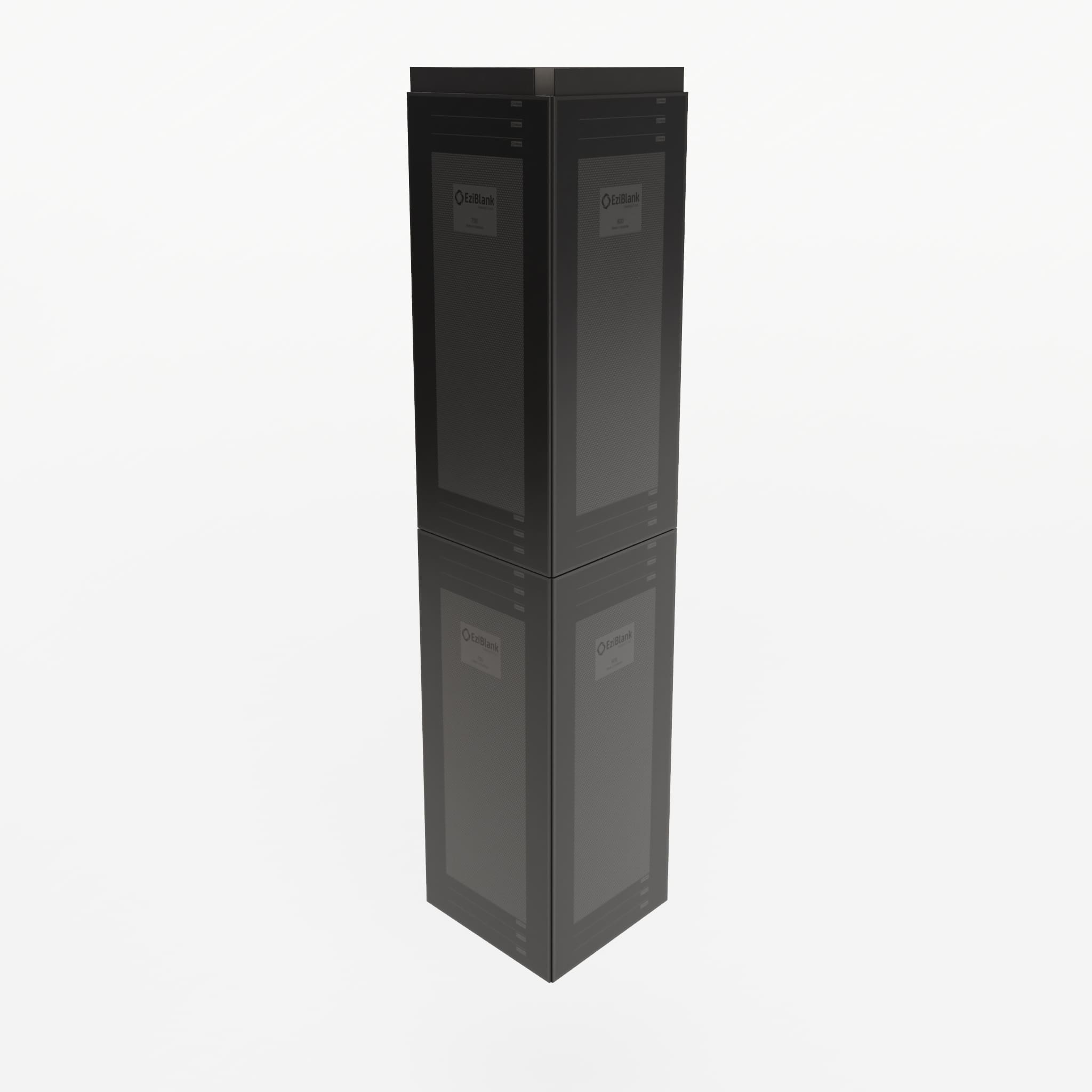
In a contained cold aisle, the goal is to trap cold supply air inside the enclosure so it has nowhere to go except through the server intakes. The containment panels, doors, and roof create a sealed volume. The floor tiles feed cold air into that volume from the plenum below. The servers draw the air through and exhaust it into the hot aisle.
Cable cutouts break this system. A standard cable cutout in a raised floor tile removes a section of the tile (typically 150 mm by 150 mm or larger) to allow power, network, or fibre cables to pass from the sub-floor plenum into the rack.
The problem is direction. Cold air in the plenum is pressurised. It wants to go up. A cable cutout gives it an uncontrolled exit point. Instead of flowing through the perforated tiles and into the cold aisle in a managed way, the air rushes through the cable cutout. Some of it travels up along the cables into the cold aisle, where it contributes to cooling (though inefficiently). Some of it exits below the tile surface and disperses before reaching the aisle. Some of it travels along the cable bundle and exits behind the rack, bypassing the servers entirely.
The net result: the contained aisle is losing pressurised cold air through every unsealed cutout. The containment system cannot build the static pressure it needs within the cold aisle because the floor is leaking.
Quantifying the Leak
Individual cable cutouts may seem small. A 150 mm square opening has an area of roughly 225 square centimetres. That is a fraction of a single floor tile’s perforated area.
But data centres have many cable cutouts. A typical row of 10 to 20 racks may have 20 to 40 cable pass-throughs in the floor (power and data cables for each rack, plus cross-connects and patch cables). If even half of those are unsealed, the total open area can rival the perforated area of one or two floor tiles.
In a contained aisle where every unit of airflow matters, losing the equivalent of one to two tiles through cable leakage is significant. It means the servers at the far end of the aisle receive less airflow. It means the CRAC units have to work harder to maintain the target supply temperature. It means the PUE improvement from containment is 0.05 to 0.1 points less than it should be.
Over a year of operation, that 0.05 to 0.1 PUE gap translates to real energy cost. In a facility with 500 kW of IT load and electricity at $0.12/kWh, a 0.05 PUE increase costs roughly $26,000 per year. That is $26,000 in cooling energy wasted through cable cutouts that could be sealed for a few hundred dollars.
The Floor Is Not the Only Leak Point
Cable openings exist in multiple locations within a rack environment, not just the floor.
Rack-top cable entry. In overhead cable tray environments, cables enter the rack through the top. If the opening between the cable tray and the rack frame is not sealed, cold air from the contained aisle can escape upward through the rack top and mix with the hot aisle air above the containment roof. This is especially common in racks without blanking panels at the top, where the gap between the last piece of equipment and the rack top creates a chimney effect.
Rack-side cable pass-throughs. Some rack configurations route cables between adjacent racks through side panel cutouts. These openings connect the cold aisle to the hot aisle through the rack interior, bypassing the server airflow path entirely.
Floor tile edge gaps. Over time, raised floor tiles shift. The edges develop gaps that allow air to leak from the plenum without going through the tile perforations. In contained aisles, these edge leaks reduce the aisle pressure just like cable cutouts do.
The Solution Is Simple and Inexpensive
Sealing cable openings does not require engineering studies, CFD modeling, or maintenance windows. It requires the right sealing products and a few hours of labour.
Brush Grommets for Floor Cutouts
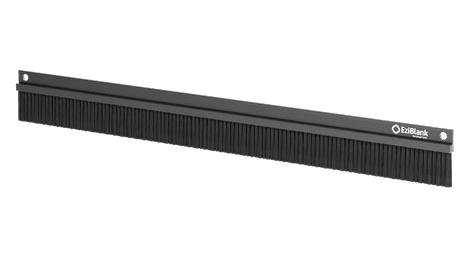
Brush grommets are the standard solution for sealing floor-level cable pass-throughs. They consist of a frame that fits into the cable cutout and a ring of dense bristles that surround the cables passing through the opening.
The bristles conform to the cable bundle, filling the space around the cables while allowing new cables to be added or removed without tools. The seal is not airtight (no brush seal is), but it eliminates the vast majority of the uncontrolled air leakage. A properly installed brush grommet reduces airflow through a cable cutout by 80% or more compared to an open hole.
Brush grommets come in standard sizes that fit common cutout dimensions. They install in minutes. They cost a fraction of a single floor tile. And they start improving the thermal performance of the contained aisle immediately.
Brush Panels for Rack-Level Cable Entry
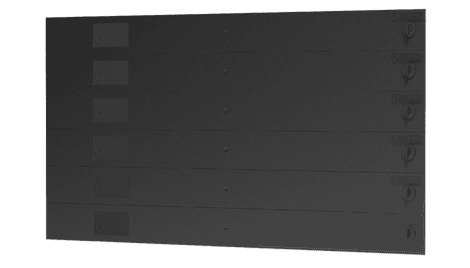
For cables entering the rack through the front or rear panel (horizontal cable entry at the rack face), 1RU brush panels provide the same sealing function at the rack level. A brush panel mounts in a standard rack unit position and allows cables to pass through a row of bristles that seal the opening around the bundle.
Brush panels are particularly valuable at the top and bottom of the rack, where cable entry points often create the largest unsealed gaps. A single unsealed 1RU opening at the top of a rack inside a contained aisle can leak enough air to affect the inlet temperature of the servers below it.
Blanking Panels for Everything Else
Any open rack unit that does not contain a cable pass-through should be sealed with a blanking panel. This includes open spaces above and below equipment, gaps left by removed servers, and any rack position that is not actively occupied by hardware.
The combination of brush grommets in the floor, brush panels at cable entry points, and blanking panels across all open rack units creates a sealed rack environment within a sealed aisle. This is what containment is designed to enable, but it only works if all three sealing layers are in place.
The Audit Takes an Afternoon
Walking a contained aisle and documenting every unsealed cable opening takes 2 to 4 hours for a typical aisle of 10 to 20 racks. The remediation (installing brush grommets and brush panels) takes a similar amount of time. The total project cost for a single aisle is minimal compared to the containment investment it protects.
Here is the audit checklist:
- Walk the cold aisle. Document every cable pass-through in the floor tiles. Note which ones have grommets and which are open.
- Check the rack tops. Document cable entry points from overhead trays. Note gaps between cable bundles and rack frames.
- Check rack-level cable panels. Document any open 1RU or 2RU positions used for cable routing without brush panel sealing.
- Check floor tile edges. Note any tiles with visible gaps, misalignment, or movement.
- Prioritise by size. Seal the largest openings first. A single large cutout leaks more than several small edge gaps.
Containment Without Sealing Is a Half-Finished Project
The industry talks about containment as if installing the panels and doors is the finish line. It is not. Containment creates the boundary. Sealing creates the pressure. Without sealing every opening within that boundary (floor, rack, and cable entry), the containment system cannot build the static pressure differential that drives its performance.
If your facility has containment but the PUE improvement was smaller than expected, look at the floor. Look at the cable openings. Look at the unsealed rack units. The answer to the performance gap is almost always hiding in the small holes that nobody thought to close.