Brush panels and cable grommets both seal openings in the data centre. Both use bristle-based mechanisms that close around cables while allowing additions and removals. Both prevent bypass airflow. From a distance, they look like the same product in different form factors.
They are not. They solve different problems, mount in different locations, and perform differently depending on the application. Choosing the wrong one for the wrong opening does not fail catastrophically. It just underperforms quietly, which is worse in some ways because nobody notices the lost efficiency.
This post compares the two products on the dimensions that matter: where they install, what they seal, how well they perform, and when to use each one.
What Each Product Actually Is
Brush Panels
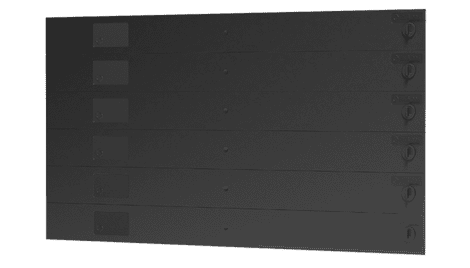
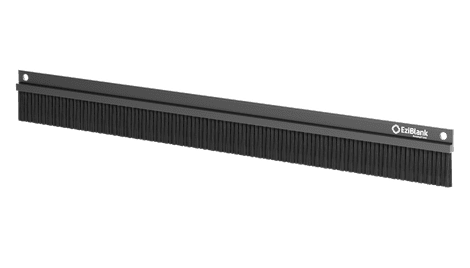
A brush panel is a rack-mounted accessory that occupies a standard rack unit position (typically 1RU). It consists of a metal or plastic faceplate with a horizontal slot filled with dense bristles. Cables pass through the bristles from front to back (or back to front, depending on the mounting orientation).
EziBlank’s 1RU brush panels mount in the same positions as blanking panels and server equipment. They use the same rack rail mounting points. They fill a rack unit space just like a blanking panel would, but instead of sealing the space completely, they provide a sealed cable pass-through.
The primary use case is horizontal cable entry at the rack face. When cables need to enter the rack from the cold aisle (patch panels, cross-connects, keyboard/video/mouse cables) or exit the rack to the hot aisle, a brush panel provides a sealed opening that prevents cold air from escaping around the cable bundle.
Cable Grommets (Brush Grommets)
A brush grommet is a floor-mounted accessory that fits into a cable cutout in a raised floor tile. It consists of a frame (round, square, or rectangular) with bristles arranged in a ring or grid pattern around the inside edge. Cables pass vertically through the bristle ring from the sub-floor plenum up into the data hall.
Brush grommets seal the gap between the cable bundle and the cutout edge. Without a grommet, a cable cutout is an open hole in the floor that bleeds pressurised air from the plenum into the data hall in an uncontrolled way. With a grommet, the bristles fill the space around the cables and reduce the leakage by 80% or more.
The primary use case is vertical cable entry from the sub-floor plenum. Power cables, network cables, and fibre runs that come up from under the floor through tile cutouts need grommets to maintain plenum pressure.
The Differences That Matter
Mounting Plane
This is the fundamental distinction. Brush panels mount vertically in the rack rail plane. Brush grommets mount horizontally in the floor plane. They seal openings in perpendicular surfaces.
This means they are not interchangeable. You cannot use a brush panel to seal a floor cutout. You cannot use a brush grommet to seal a rack-level cable entry. The mounting hardware, dimensions, and bristle orientation are specific to each application.
Airflow Direction
Brush panels control horizontal airflow. In a data centre with front-to-back airflow through the racks, an unsealed opening at the rack face allows cold aisle air to leak through without passing over the server components. The brush panel seals this path while letting cables through.
Brush grommets control vertical airflow. In a raised floor environment, pressurised air in the plenum pushes upward through any opening. An unsealed cable cutout allows this pressurised air to escape the plenum without going through the floor tile perforations. The grommet seals this path.
The distinction matters because the air pressure and velocity characteristics are different in each plane. Sub-floor plenum pressure (typically 0.02 to 0.05 inches of water gauge in a well-managed facility) drives air through floor openings at moderate velocity. The pressure differential across a rack-mounted brush panel depends on whether the aisle is contained (higher differential) or open (lower differential).
Seal Quality
Both products use bristles, but the sealing requirements differ.
Floor grommets need to handle heavier cable bundles (power cables are thick and rigid) and larger cutout sizes. The bristles must be stiff enough to maintain contact around heavy cables while flexible enough to accept new additions. The seal quality depends heavily on how well the grommet size matches the cutout size and how tightly the bristles contact the cable bundle. A loose-fitting grommet in an oversized cutout provides minimal sealing.
Rack brush panels handle lighter cable bundles (patch cables, network cables, fibre) and work with standardised rack unit openings. The bristles can be finer and more densely packed because the cables are thinner. The seal quality is generally more consistent than floor grommets because the mounting dimensions are standardised (19-inch rack width, 1RU height).
Reusability and Cable Changes
Both products allow cable additions and removals without disassembly. This is the core advantage of bristle-based sealing over rigid seals (foam inserts, putty, or fixed gaskets).
Brush panels handle frequent cable changes well because the cables they manage (patch cables, cross-connects) are changed more often than power feeds. The bristles flex to accept new cables and close around the remaining bundle when cables are removed. Well-made brush panels maintain seal quality over hundreds of cable change cycles.
Brush grommets handle less frequent changes (power cabling and backbone network runs change less often than patch cables) but must accommodate thicker, stiffer cables. The bristles in a grommet see more mechanical stress per cable change because the cables are heavier and require more force to route through the bristle ring.
When to Use Each Product
Use Brush Panels When:
Cables enter the rack horizontally from the aisle. This is the primary application. Patch panels, cross-connects, and any cable that routes from one rack to another through the aisle needs a sealed entry point. A brush panel provides that seal while occupying a standard rack unit position.
A rack unit is used for cable management, not equipment. In many rack configurations, one or more rack units are dedicated to cable routing (between switches and patch panels, for example). If that position would otherwise be an open gap in the rack face, a brush panel seals it while accommodating the cables.
Contained aisles need rack-level sealing. In a contained cold aisle, every gap in the rack face leaks pressurised cold air into the rack interior without it passing through the servers. Brush panels seal cable entry points that would otherwise be open gaps in the containment zone.
Use Brush Grommets When:
Cables pass through raised floor tile cutouts. This is the primary application. Every power cable, network cable, and fibre run that comes up from the sub-floor plenum needs a sealed pass-through to maintain plenum pressure.
Floor cutouts exist in contained aisles. Cable cutouts inside a contained cold aisle are double problems: they leak plenum pressure and they leak cold aisle pressure. A brush grommet seals both leaks simultaneously.
Existing cutouts are unsealed or use worn gaskets. Many older facilities used rubber gaskets or split-foam inserts to seal cable cutouts. These materials degrade over time (rubber hardens and cracks, foam compresses and loses its seal). Brush grommets are the replacement product for any failed or degraded cable cutout seal.
Use Both When:
In most raised floor data centres, the answer is both. Floor grommets seal the vertical cable paths from the plenum. Brush panels seal the horizontal cable entry points at the rack face. Blanking panels seal every remaining open rack unit.
These three products form a complete sealing system. Removing any one of them leaves gaps that allow bypass airflow. The combination is what delivers the full cooling performance that the containment system and the cooling infrastructure are designed to provide.
The Cost of Getting It Wrong
Using the wrong product (or no product) at a cable opening does not cause alarms or outages. It causes a slow, invisible loss of cooling efficiency. The CRAC units work slightly harder. The electricity bill is slightly higher. The hot spots are slightly worse. None of these effects are dramatic enough to trigger investigation on their own.
But they add up. A facility with 200 racks and an average of 3 unsealed cable openings per rack (a mix of floor cutouts and rack-level entries) has 600 uncontrolled air leak points. Even if each one is small, the aggregate effect on plenum pressure, aisle pressure, and cooling delivery is measurable.
Sealing all 600 openings with the appropriate product (grommets for the floor, brush panels for the rack, blanking panels for open rack units) is a project that costs a few thousand dollars in materials and a few days of labour. The energy savings pay for the project within months.
Contact EziBlank to discuss brush panels, brush grommets, and blanking panels for your facility.