Most data centres have enough cooling. They do not have a capacity problem. They have a delivery problem.
The cooling infrastructure (CRAC units, chilled water plants, condensers) produces enough cold air to handle the IT load with margin to spare. But somewhere between the cooling unit output and the server inlet, a significant portion of that cooling capacity is lost. It gets wasted through bypass paths, mixing, leakage, and misdirection.
Industry research from organisations like the Uptime Institute and the Green Grid has consistently found that typical data centres lose 20 to 40% of their cooling output to these waste mechanisms. The midpoint of that range, roughly 30%, has held steady across multiple studies and facility types over the past decade.
This is not a rounding error. In a facility spending $500,000 per year on cooling energy, 30% waste means $150,000 per year in electricity that cools nothing. And unlike most capital equipment problems, this waste can be reduced dramatically with operational changes that cost a fraction of that annual loss.
This post breaks down the four primary mechanisms that waste cooling capacity and explains what each one costs.
Waste Mechanism 1: Bypass Airflow
Bypass airflow is cold supply air that returns to the cooling unit without ever passing through IT equipment. It travels from the cold side to the hot side through paths that bypass the servers entirely.
The most common bypass paths:
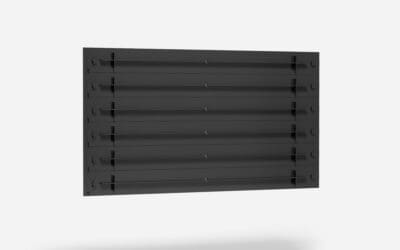
Open rack units. Every rack unit without a blanking panel or piece of equipment is an open hole between the cold aisle and the hot aisle. Cold air enters through the gap, passes through the empty space, and exits out the back of the rack at nearly the same temperature. The cooling system produced that air, distributed it through the plenum, and delivered it through the floor tile, only for it to contribute nothing to heat removal.
In a typical data centre where 20 to 30% of rack units are unoccupied, bypass through open rack units accounts for a substantial portion of total cooling waste.
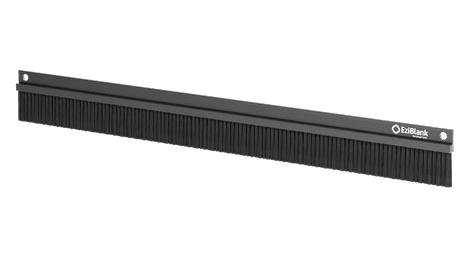
Unsealed cable openings. Cable cutouts in floor tiles, rack-top cable entries, and side-panel pass-throughs all allow cold air to escape from the cold aisle or the plenum without passing through server equipment. Each individual opening is small. Collectively, they represent a significant leakage area.
Floor tile gaps and edge leaks. Raised floor tiles shift over time. Pedestals settle. The gaps between tiles widen. Each gap is an uncontrolled air leak from the pressurised plenum. In facilities with hundreds of tiles, the cumulative leakage from edge gaps can equal the output of several perforated tiles.
What it costs: Bypass airflow is the single largest source of cooling waste in most facilities. Research published by the Uptime Institute estimates that bypass airflow accounts for roughly half of all cooling inefficiency in poorly managed data centres. In a facility losing 30% of its cooling capacity, bypass airflow alone may account for 15 to 20 percentage points of that loss.
How to fix it: Blanking panels in every open rack unit. Brush grommets in every cable cutout. Floor tile gaskets and edge seals. These are the lowest-cost, highest-impact interventions available. The materials cost a few dollars per unit. The installation takes minutes.
Waste Mechanism 2: Hot Air Recirculation
Recirculation is the inverse of bypass. Instead of cold air bypassing the servers, hot exhaust air recirculates back to the cold aisle and re-enters the server inlets. The servers then work to remove heat that the cooling system already rejected once.
Recirculation happens when:
Hot aisle air rolls over the top of the rack. In facilities without containment, hot exhaust air rises above the rack line and curls back over the top into the cold aisle. The effect is strongest at the top of the rack, where inlet temperatures can be 8 to 12 degrees Celsius higher than at the bottom of the same rack.
Hot air enters through the sides. Racks without side panels or racks positioned at the end of a row allow hot aisle air to flow around the side and into the cold aisle.
Return air paths pull air across the cold aisle. If the CRAC unit return air intake is positioned in a way that pulls air across the cold aisle (rather than drawing from the hot aisle), it can drag hot air into the cold zone.
What it costs: Recirculation forces the cooling system to deliver supply air at lower temperatures to compensate for the hot air mixing at the server inlets. If the target inlet temperature is 22 degrees but recirculation adds 4 degrees of hot air, the cooling system must supply air at 18 degrees to achieve the same 22-degree inlet. That 4-degree supply temperature reduction increases compressor energy consumption significantly.
How to fix it: Aisle containment is the definitive solution. By physically separating the hot and cold air streams, containment eliminates recirculation at the aisle level. For facilities where full containment is not yet feasible, reducing thermal recirculation through blanking panels and rack-end sealing provides partial improvement.
Waste Mechanism 3: Short-Circuiting
Short-circuiting occurs when cold air from the cooling unit returns to the cooling unit without reaching the IT equipment. This is different from bypass in that the air never even enters the data hall. It stays within the cooling system’s local circulation pattern.
The most common cause is poor CRAC/CRAH unit positioning. If the unit’s supply air outlet is too close to its return air intake (or if the room geometry directs the supply air back to the return), the unit works continuously while delivering minimal cooling to the racks.
Short-circuiting is also common when CRAC units are positioned against walls or in corners where the supply air cannot disperse effectively into the plenum. The air enters the plenum, hits the wall, bounces back, and returns to the unit.
What it costs: A short-circuiting CRAC unit consumes full electrical power while delivering a fraction of its rated cooling capacity. The energy is spent. The cooling is not delivered. Other units on the floor work harder to compensate, increasing total energy consumption further.
How to fix it: This is primarily a facility design and mechanical engineering issue. Solutions include repositioning CRAC units, adding plenum baffles to redirect airflow, and using variable fan speeds to manage supply air distribution. While not directly an airflow management product issue, short-circuiting is often masked by the same symptoms as bypass and recirculation (hot spots, uneven temperatures), making it important to rule out during thermal audits.
Waste Mechanism 4: Overcooling
Overcooling is the practice of delivering supply air at lower temperatures than necessary to compensate for the other three waste mechanisms. It is a symptom, not a root cause, but it is worth examining separately because it carries its own energy cost.
In a perfectly managed airflow environment (all rack units sealed, all cable openings sealed, containment in place, no recirculation), the cooling system can deliver supply air at a relatively high temperature (20 to 24 degrees Celsius) and achieve the target inlet temperature at every rack.
In a poorly managed environment, the cooling system must deliver much colder air (14 to 18 degrees Celsius) to compensate for bypass mixing, recirculation, and distribution losses. By the time that air reaches the rack inlets, it has warmed to the target range, but the energy required to produce the colder supply air is significantly higher.
Every degree Celsius of supply air temperature reduction increases cooling energy consumption. The relationship varies by system type, but a common reference is 2 to 4% additional energy per degree of supply temperature reduction. If poor airflow management forces the supply temperature down by 6 degrees, the cooling system consumes 12 to 24% more energy than it would in a well-managed environment.
What it costs: Overcooling is the cumulative tax paid for every other airflow management failure. It is the reason facilities with adequate cooling capacity still have high PUE values and high electricity bills.
How to fix it: Fix the upstream causes (bypass, recirculation, short-circuiting) and the supply temperature can rise. Higher supply temperatures mean less compressor work, less energy consumption, and lower PUE.
The 30% Is Recoverable
The 30% waste figure is not a fixed condition. It is the result of addressable problems with known solutions. Facilities that implement a systematic airflow management programme (blanking panels, brush grommets, containment, tile optimisation, and monitoring) routinely recover half or more of that waste.
The investment required to recover it is small relative to the annual cost of the waste itself. A complete airflow remediation project (blanking panels, brush grommets, tile audit, and sealing) for a 200-rack facility costs a fraction of the annual cooling energy those racks consume. The payback is measured in months, not years.
The 30% is not something you have to live with. It is something you can fix.
Contact EziBlank to scope an airflow management remediation for your facility.