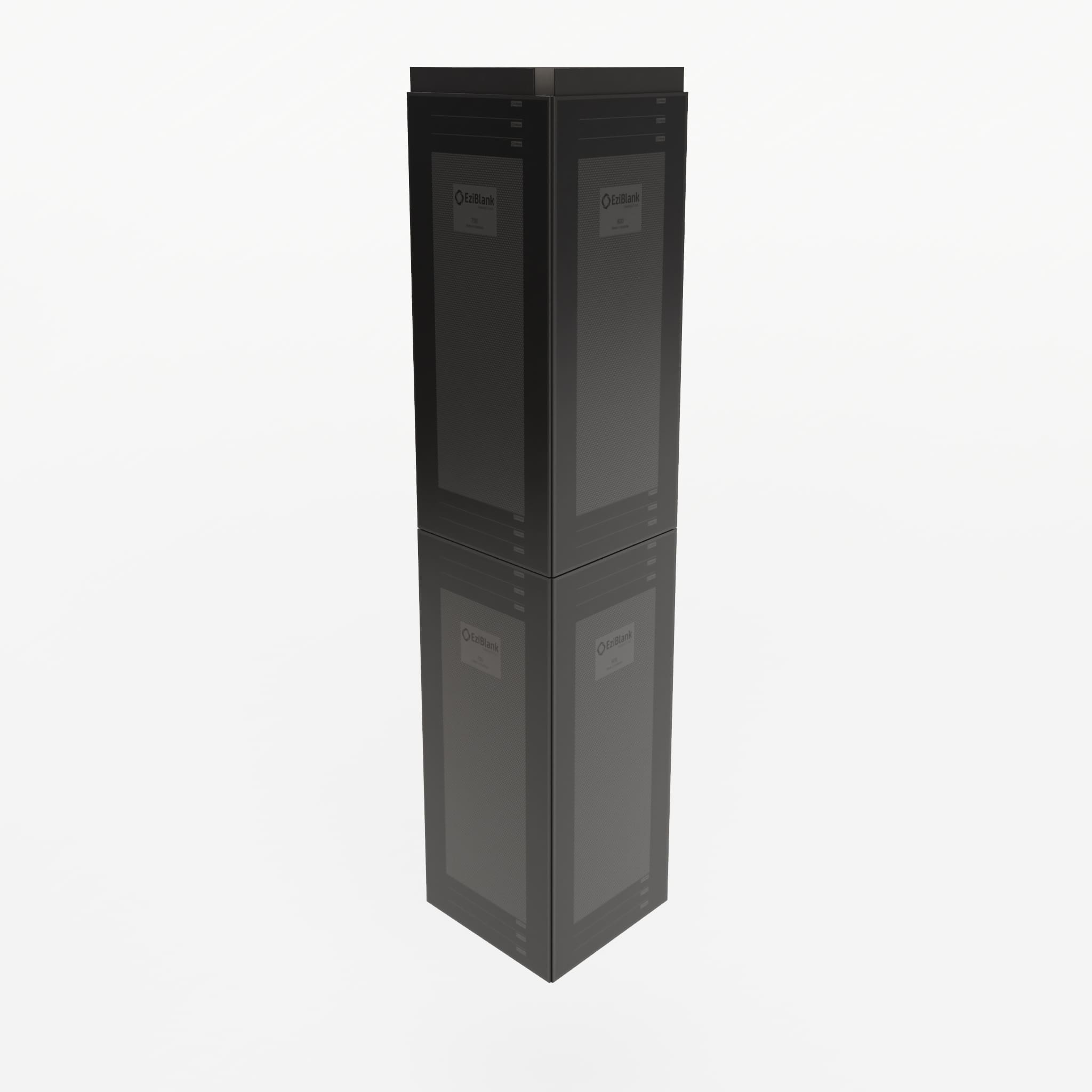

Blanking panels are often treated as disposable. A technician removes one to install a new server, tosses it in a bin, and grabs a fresh one from storage when the next rack needs sealing. Over the course of a year, facilities go through hundreds of panels this way.
But blanking panels are not supposed to be disposable. A well-designed panel should last as long as the rack it is mounted in. The question is: why do some panels fail after a few months while others survive for a decade or more?
The answer comes down to material, design, and the specific stresses your environment puts on the product. This post examines the real-world factors that determine how long a blanking panel lasts, and how to calculate whether your current panels are costing more than they should over their full lifecycle.
The Four Forces That Kill Blanking Panels
1. Mechanical Stress from Installation and Removal
Every time a blanking panel is installed or removed, the mounting mechanism absorbs stress. Snap-fit tabs flex. Screw holes experience torque. Friction-fit edges compress and expand.
The design of the mounting system determines how many cycles a panel can survive. There are three common approaches:
Screw-mounted panels use cage nuts or thread-forming screws. The panel itself endures minimal stress, but the rack rails take the wear. Over time, cage nut holes enlarge, screws strip, and the panel sits loose. The panel might last indefinitely, but the mounting system fails.
Snap-fit panels use integrated plastic clips that grip the rack rails. The quality difference between manufacturers is enormous here. A well-engineered snap-fit mechanism distributes force across a wide contact area and returns to its original shape after each cycle. A poorly designed one concentrates force on thin tabs that fatigue and snap after a handful of installations.
Tool-free modular panels (like the EziBlank universal design) use a spring-loaded or sliding mechanism that adjusts to the rail width and locks in place without deforming. This approach delivers the highest cycle count because no part of the panel undergoes plastic deformation during installation.
Industry testing by panel manufacturers shows that high-quality snap-fit and modular panels can survive 50 or more installation cycles without measurable loss of grip force. Budget panels from unbranded suppliers often fail within 5 to 10 cycles.
2. Heat Exposure and Thermal Cycling
Blanking panels sit in the transition zone between cold supply air and hot exhaust air. Depending on their position in the rack, they may experience continuous temperature differentials of 15 to 25 degrees Celsius across their surface.
Over years, this thermal cycling causes expansion and contraction in the panel material. ABS plastic handles this well because it has a relatively low coefficient of thermal expansion and good dimensional stability across the operating temperature range of most data centres (18 to 35 degrees Celsius).
Steel panels are unaffected by these temperatures. Foam panels degrade fastest under thermal cycling because the cellular structure compresses and does not recover.
In facilities operating at ASHRAE’s wider allowable temperature ranges (A2 and above), panels experience more extreme thermal conditions. Understanding how your facility’s temperature policies interact with panel materials helps predict lifespan accurately.
3. Chemical Exposure
Data centre cleaning protocols vary widely. Some facilities use only dry microfibre cloths. Others use isopropyl alcohol, commercial degreasers, or anti-static sprays.
Most cleaning agents are safe for ABS and steel. However, certain solvents (acetone, MEK, chlorinated cleaners) can attack ABS surfaces, causing crazing (fine surface cracks) that weakens the material over time. If your cleaning team uses strong solvents, check compatibility with your panel material.
Steel panels with powder coating can lose their finish when exposed to acidic cleaners, leading to surface rust in humid environments. This is more common in tropical climates or facilities without tight humidity control.
Foam panels absorb liquid. Any spray that contacts foam soaks in and cannot be fully removed. Over time, this leads to odour, biological growth in humid environments, and structural breakdown of the foam cell walls.
4. UV Exposure in Windowed Racks
This is a factor that most people overlook. Some server racks have transparent side panels or doors (acrylic or tempered glass) for visual monitoring or aesthetic purposes in showcase environments.
If blanking panels are exposed to fluorescent or LED lighting through these windows for extended periods, UV degradation can occur. ABS is moderately UV-resistant, but prolonged exposure (years) can cause yellowing and surface brittleness. UV-stabilized formulations exist but are not standard in most blanking panel products.
For most data centres with solid rack enclosures, UV is not a factor. But for showcase server rooms, demo labs, or glass-fronted racks, it is worth noting.
Calculating Lifecycle Cost
The purchase price of a blanking panel is a small number. A few dollars per unit. But the lifecycle cost includes more than the purchase price.
Replacement frequency: If a panel fails after 5 installation cycles and your rack changes configuration twice a year, you replace panels every 2.5 years. Over a 10-year rack lifespan, that is 4 sets of panels. A panel that survives 50 cycles lasts the full 10 years on one purchase.
Labour cost per replacement: Screw-mounted panels take 2 to 3 minutes per rack unit to install. Tool-free panels take under 30 seconds. Multiply by the number of open rack units and the number of racks in your facility, then multiply by your technician’s hourly rate. Over 10 years, the labour difference between slow-install and fast-install panels is significant.
Waste disposal: Facilities with sustainability reporting requirements need to account for panel waste. Foam panels generate the most waste because they cannot be reused. Steel and ABS panels that survive longer generate less waste over the reporting period.
Cooling cost from failed seals: A degraded panel that no longer seals properly allows bypass airflow. The cooling cost of bypass airflow through even a few open rack units is measurable. The ROI calculator on the EziBlank site helps quantify this for your specific environment.
When you add these factors together, the cheapest panel per unit is often the most expensive panel per decade.
What “Long-Lasting” Actually Means
A blanking panel should last 10 years or more in a typical data centre environment if:
- The material is rated for the thermal range of the facility
- The mounting mechanism survives at least 30 to 50 installation cycles
- The material is resistant to standard data centre cleaning agents
- The panel maintains its structural shape and seal quality over time
Products that meet these criteria exist. EziBlank’s universal blanking panels are designed for modular reuse across the full lifecycle of the rack, with flame-retardant ABS that maintains dimensional stability and grip force over hundreds of thermal cycles.
Products that do not meet these criteria also exist, and they are usually the ones that end up in the bin after every server swap.
Make the Lifespan Part of the Spec
When you write the procurement specification for blanking panels, include lifespan criteria alongside fire rating and sizing. Ask for:
- Rated installation cycles (minimum 30)
- Material specification with thermal range documentation
- Chemical compatibility data for your cleaning protocols
- Warranty or replacement commitment from the vendor
A panel that costs 20% more per unit but lasts 5 times longer is not a more expensive product. It is a less expensive one.
Talk to EziBlank about lifecycle specifications for your facility.