Containment makes sense in almost every data centre. The physics are clear: separating hot and cold air reduces cooling waste, lowers PUE, and extends equipment lifespan. In enterprise data centres, the decision is internal. One team owns the building, the servers, and the budget. The ROI calculation is straightforward.
Colocation is different. The building belongs to the provider. The servers belong to the tenant. The cooling bill is split, bundled, or passed through in ways that vary by contract. And the decision to install containment sits in the gap between those two parties, often stuck there for months or years because the incentive structure is misaligned.
This post examines the landlord-tenant problem in colocation containment: who bears the cost, who captures the benefit, and how facilities and tenants can structure agreements that move containment from “good idea” to “installed and working.”
The Incentive Misalignment
In a typical colocation arrangement, the provider owns and operates the facility. They pay for the cooling infrastructure, the power distribution, and the building envelope. The tenant leases space (by the rack, cage, or suite) and pays for power consumption, either as a metered charge or as a bundled rate per kilowatt.
Containment is a capital improvement to the facility. The provider installs it. The provider pays for the materials, engineering, and installation. The provider may also need to adjust the cooling system and conduct a fire suppression review.
The benefit, however, flows primarily to the cooling system. Containment reduces cooling energy consumption. If the provider pays the cooling bill (common in bundled pricing models), the provider benefits directly. If the tenant pays a metered power charge that includes a cooling overhead factor (a PUE multiplier), the tenant benefits through a lower effective rate.
This is where the friction starts.
If the provider pays the cooling bill: The provider has a direct incentive to install containment because it reduces their operating costs. But the capital expenditure competes with other infrastructure investments (new capacity, electrical upgrades, network improvements). Containment often loses this internal competition because it does not generate new revenue. It only reduces cost.
If the tenant pays a PUE-adjusted rate: The tenant benefits from lower bills after containment is installed. But the tenant does not own the building and cannot install containment themselves. They are dependent on the provider to make the investment. The provider, meanwhile, has less incentive because the savings flow to the tenant.
If the pricing is flat rate per kW: Neither party has a direct financial incentive tied to cooling efficiency. The provider’s cooling costs are absorbed into the flat rate, and efficiency improvements do not change what either party pays or receives. Containment becomes a pure capital cost with no visible return on either side.
Why This Matters for Purchasing Decisions
Marcus manages servers in a colocation facility. He knows his racks run hot. He knows the open rack units in his cage allow bypass airflow. He has the authority to purchase blanking panels for his colocation racks because they are rack-level accessories that do not modify the building.
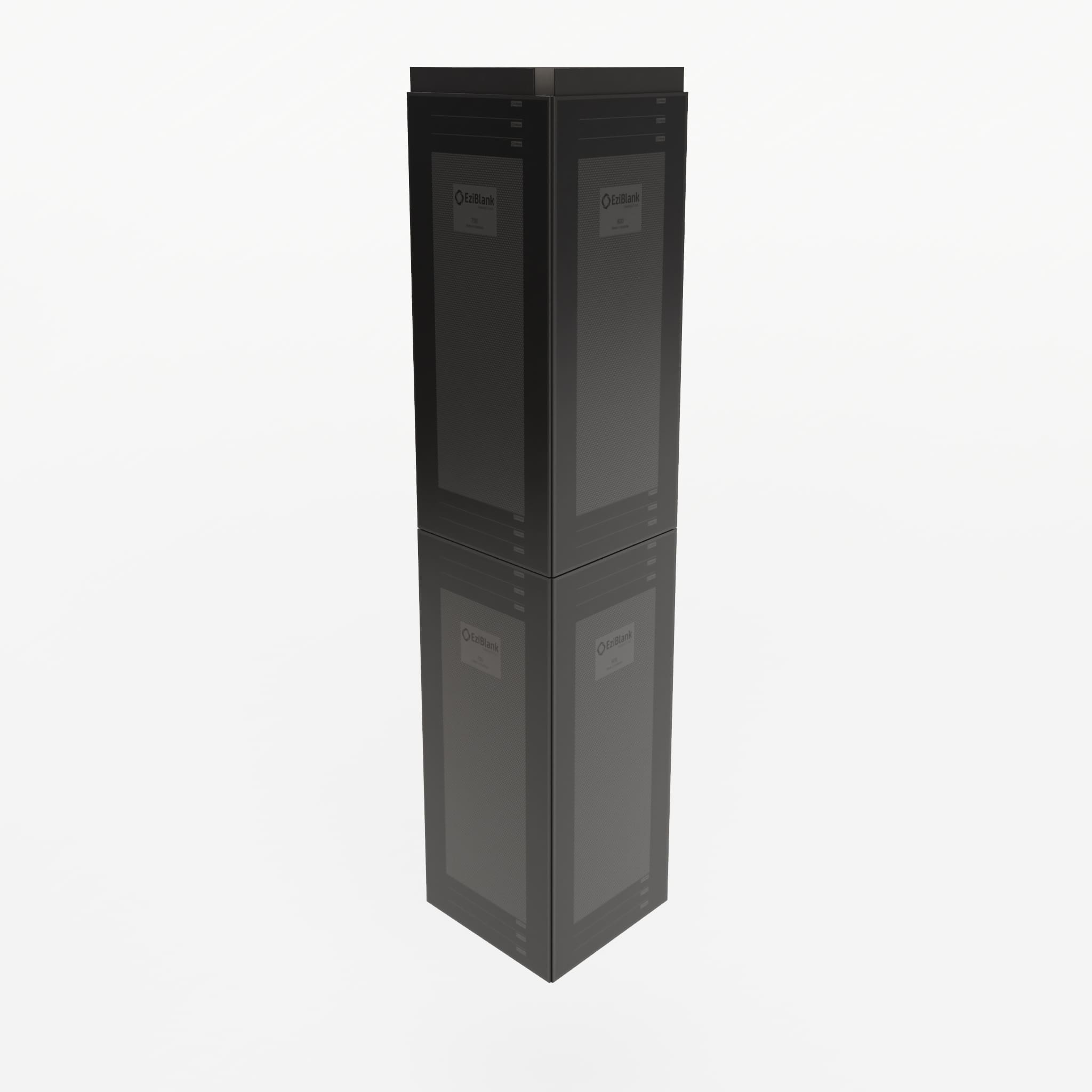
But containment is different. Containment attaches to the ceiling, creates physical barriers in the data hall, and potentially affects fire suppression coverage. It requires the provider’s approval, engineering, and often their direct involvement in installation.
Marcus cannot solve this alone. And his provider may not prioritise it. This leaves many colocation environments running without containment even when the thermal case is obvious, simply because the commercial structure does not support the investment.
Models That Work
The colocation industry has developed several approaches to break this deadlock. None are perfect, but each addresses the incentive gap in a different way.
Provider-Funded, Rate Recovery
The provider installs containment and recovers the cost through a small adjustment to the tenant’s rate or through a one-time improvement charge. This works best in long-term contracts (3 to 5 years or more) where the provider can amortize the capital cost over the lease term.
The advantage: the tenant gets containment without upfront capital. The provider recovers their investment through contracted revenue.
The risk: if the tenant churns before the cost is recovered, the provider absorbs the loss. Providers mitigate this with contract lock-in clauses or improvement amortization schedules.
Tenant-Funded, Provider-Managed
The tenant pays for the containment system directly. The provider manages the design, installation, and integration with the facility’s cooling and fire suppression systems. This model works when the tenant has a strong business case for containment (high-density workloads, strict SLA requirements, or internal sustainability mandates).
The advantage: the tenant controls the timeline and captures the full benefit. The provider has no capital at risk.
The risk: the tenant is paying for an improvement to a building they do not own. If the lease ends, the containment stays with the facility. This needs to be addressed in the contract (removal rights, residual value, or lease extension terms).
Shared Investment, Shared Savings
Both parties contribute to the project cost and share the resulting savings. The split is negotiated based on each party’s benefit. If the provider captures most of the cooling savings (bundled pricing), they contribute more. If the tenant captures the savings (PUE-adjusted pricing), they contribute more.
This model is the most equitable but also the most complex to negotiate. It requires agreement on baseline PUE, measurement methodology, savings calculation, and duration of the sharing arrangement.
Provider Installs, Tenant Gets SLA Improvement
Instead of sharing financial savings, the provider installs containment and offers the tenant an improved thermal SLA (tighter inlet temperature guarantee, higher density allowance, or reduced thermal incident response time). The tenant pays the same rate but receives better service.
This works well when the tenant values operational reliability over cost reduction. For tenants running latency-sensitive or mission-critical workloads, a tighter thermal SLA can be worth more than a few percentage points of energy savings.
What Tenants Can Do Right Now
While waiting for containment (or negotiating for it), colocation tenants can take immediate action at the rack level to improve their thermal environment.
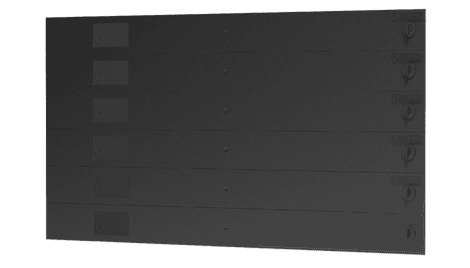
Seal every open rack unit. This is the single highest-impact action a tenant can take unilaterally. Blanking panels prevent bypass airflow within the rack, which is the tenant’s side of the airflow management equation. Blanking panels do not require provider approval, structural modification, or fire review. They install in seconds and start working immediately.
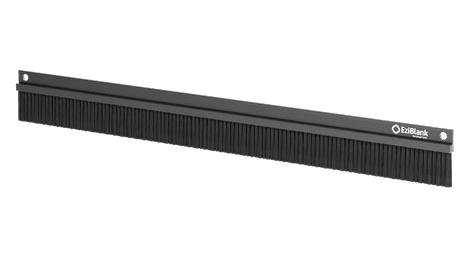
Seal cable openings. Cable pass-throughs in the rack floor or in the rack’s cable management panels allow cold air to escape the cold aisle without passing through servers. Brush grommets and brush panels seal these openings while maintaining cable access.
Document the thermal impact. If you want your provider to invest in containment, bring data. Measure inlet temperatures across your racks. Show the variance. Identify hot spots. Calculate the energy being wasted through cooling inefficiency and present it to your provider as a shared problem with a quantifiable cost.
Providers respond to data. A tenant who walks in with temperature maps and energy calculations gets a different conversation than one who says “it feels hot in here.”
The Provider’s Perspective
Colocation providers face real constraints. They manage multiple tenants with different density requirements, different equipment generations, and different expectations. Installing containment across an entire data hall is a significant project. Doing it for one tenant’s cage while the rest of the hall remains open creates partial containment, which delivers partial results.
The most successful containment deployments in colocation happen when providers commit to facility-wide rollouts. This levels the playing field for all tenants, maximises the PUE improvement, and simplifies the fire suppression review (one review for the whole hall rather than piecemeal reviews for individual cages).
Providers who view containment as a competitive differentiator (rather than a cost centre) tend to move faster. In markets where multiple colocation providers compete for the same tenants, thermal performance and PUE metrics increasingly influence tenant decisions. A provider with documented PUE improvements from containment has a sales tool that competitors without containment cannot match.
The Conversation Needs to Happen
Containment in colocation stalls because the conversation between provider and tenant never gets specific enough. Both sides agree it is a good idea. Neither side takes the next step because the commercial framework is unclear.
If you are a tenant, start with rack-level airflow management (blanking panels and brush sealing), document the thermal baseline, and present a specific containment proposal to your provider with a suggested cost-sharing model.
If you are a provider, model the facility-wide PUE improvement from full containment deployment. The energy savings often justify the capital within 18 to 24 months. The competitive advantage lasts much longer.
Contact EziBlank to discuss airflow management products for colocation environments.