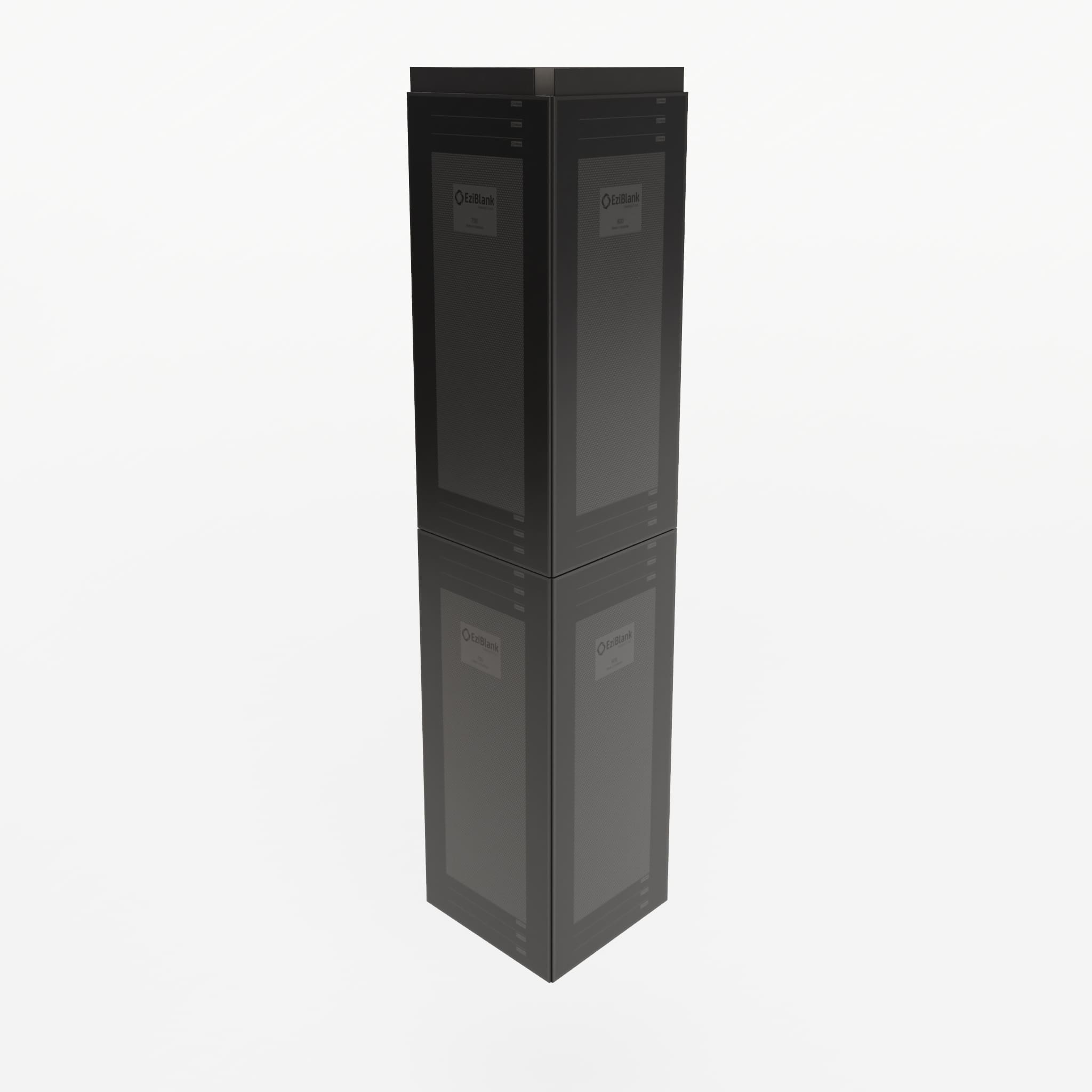
Hyperscale Data Center Airflow Management at Scale
Managing airflow in a hyperscale data centre is a different problem than managing airflow in a 200-rack enterprise facility. The principles are the same, but the execution has to be systematised, repeatable, and scalable across thousands of racks, multiple halls, and often multiple campuses.
At hyperscale, a single missing blanking panel is insignificant. A thousand missing blanking panels across a 10,000-rack campus is a cooling crisis. The challenge is not understanding what needs to be done. It is building the processes and supply chains that keep it done consistently across every rack, every row, and every facility.
For a broader look at airflow management processes and blanking panel standardisation at scale, see hyperscale airflow management.
The Scale Problem
Hyperscale operators manage facilities with 5,000 to 50,000+ racks per campus. Equipment moves happen daily. Racks are provisioned, decommissioned, and reconfigured in batches of hundreds. Each move creates open U-spaces that need blanking panels, and each panel that is not replaced is a source of wasted cooling energy.
At the scale of a single 5,000-rack hall, even modest blanking panel coverage gaps add up quickly. If the average rack has 3U of unsealed space, that is 15,000U of open area across the hall, enough to recirculate significant volumes of hot air and force the cooling plant to compensate with higher fan speeds and lower supply temperatures.
The cost of that compensation is not theoretical. Hyperscale facilities spend millions of dollars per year on cooling energy. A 5% improvement in cooling efficiency from proper airflow management can translate to hundreds of thousands of dollars in annual savings across a single campus.
Facilities with thousands of racks need standardised processes for blanking panel deployment and containment maintenance. See airflow management at hyperscale.
Select the Right Airflow Panels for Your Compact Rack Configuration
-
19″ 6RU Universal Blanking Panel
Price range: $186.00 through $200.00 AUD -

21″ 10SU Universal Blanking Panel for ETSI Rack
Price range: $240.00 through $250.00 AUD -
23″ 6RU Universal Blanking Panel
$250.00 AUD -
19” 6RU Standard Blanking Panel
Price range: $145.00 through $186.00 AUD -
New 19″ 6RU Universal Blanking Panel
Standardised Blanking Panel Deployment
The most effective hyperscale operators treat blanking panels as a standard consumable, not a one-time procurement. Panels are stocked in on-site warehouses alongside cable, power cords, and rack hardware. Every rack deployment, decommission, and reconfiguration procedure includes a blanking panel step.
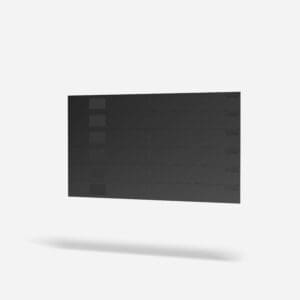
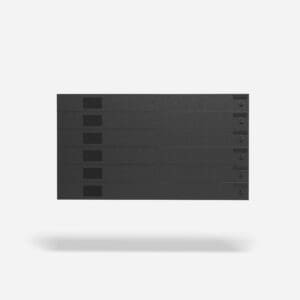
Blanking panels for server racks from EziBlank support this approach with a modular design that simplifies inventory management. Each panel ships as a 6RU block that snaps apart into 1U segments. This means a single SKU covers any gap size from 1U to full rack height. There is no need to stock multiple panel sizes or track which size goes where.
The tool-free installation and removal is equally important at scale. Technicians performing rack changes should not need to locate cage nut tools or screwdrivers to replace blanking panels. The snap-on design means panels go in during the same pass as the equipment change, not as a separate follow-up task that may or may not happen.
For hyperscale environments with mixed rack types (acquired through acquisitions or partnerships with different hardware vendors), the Universal panel fits square-hole, round-hole, and threaded-hole rails. Standardising on a single Universal panel across the facility eliminates compatibility issues and simplifies procurement.
AI clusters often operate within hyperscale facilities. For standardised blanking panel deployment and containment strategies across large campuses, see hyperscale airflow strategies.
Containment at Scale
Blanking panels manage airflow at the rack level. Containment manages airflow at the row and hall level. At hyperscale, containment is not optional. Without it, the volume of hot exhaust air from thousands of racks overwhelms the cooling system’s ability to maintain separation between hot and cold airstreams.
Aisle containment at scale from EziBlank uses modular panels, end-of-row doors, and ceiling baffles that form a continuous barrier between the hot and cold aisles. The modular design allows containment to be extended as new rows are commissioned and reconfigured as rack layouts change.
Hot aisle containment is the more common approach in hyperscale facilities. It encloses the hot exhaust aisle and returns hot air directly to the cooling units, while the rest of the hall functions as a cold air supply. This configuration is easier to maintain at scale because it does not require ceiling-level sealing above the cold aisles.
For hyperscale facilities with non-standard row configurations (varied rack heights, mixed orientation, irregular floor plans), tailor-made solutions for non-standard configurations provide custom containment components built to specific dimensions.
For facilities with 5,000+ racks, airflow management becomes an operational discipline. See hyperscale data center cooling for deployment strategies at scale.
Monitoring Across Facilities
At enterprise scale, a facilities manager can walk the floor and identify hot spots visually or with a handheld thermometer. At hyperscale, that approach does not work. A single technician cannot monitor 5,000 racks. Automated monitoring is a requirement, not an option.
EkkoSense monitoring across facilities provides the thermal visibility layer that hyperscale operations need. Wireless sensors deployed at rack inlets feed real-time temperature data to a centralised dashboard. Machine learning analytics identify cooling inefficiencies, predict hot spots, and recommend set point adjustments.
For multi-site operators, EkkoSense supports multi-campus monitoring from a single platform. This enables global operations teams to compare thermal performance across facilities, identify sites or halls that are underperforming, and prioritise airflow management improvements based on data rather than assumptions.
The monitoring data also closes the feedback loop on blanking panel deployment. After a blanking panel installation project, EkkoSense shows the measured thermal improvement at each rack position, providing the data to validate the investment and plan the next phase.
Enterprise-Scale Deployments
Not every large facility operates at true hyperscale, but many enterprise data center blanking panels deployments face similar challenges. Facilities with 500 to 5,000 racks require the same standardised approach to blanking panel inventory, installation procedures, and ongoing coverage management.
The transition point is typically around 200 to 500 racks. Below that, blanking panel management can be handled informally. Above it, a documented process with tracked metrics is needed to prevent coverage from degrading over time.
Getting Started
For hyperscale operators planning a blanking panel standardisation program, the EziBlank team provides volume pricing, scheduled delivery programs, and deployment planning support. Contact the team to discuss your facility requirements.