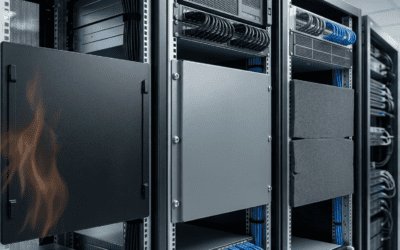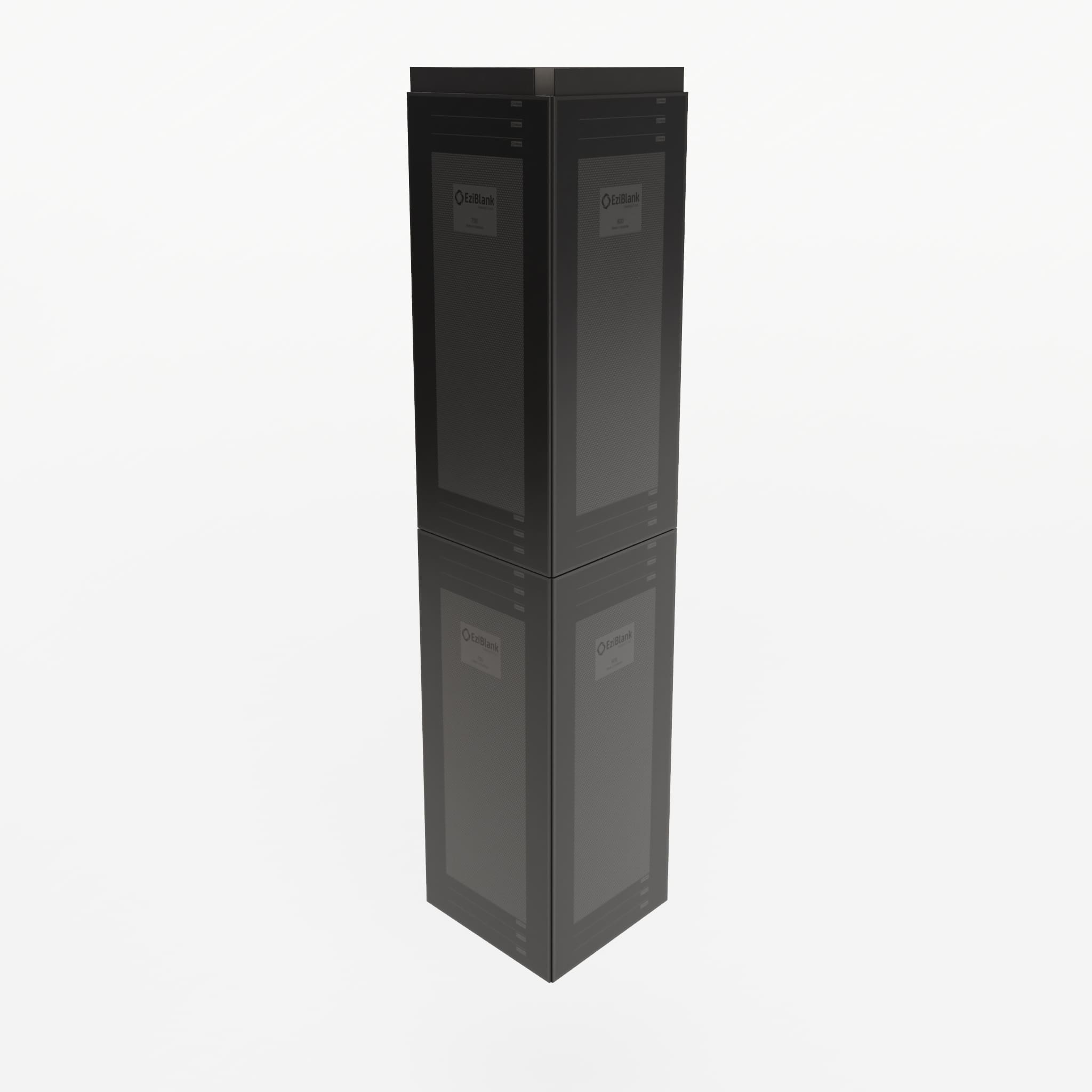
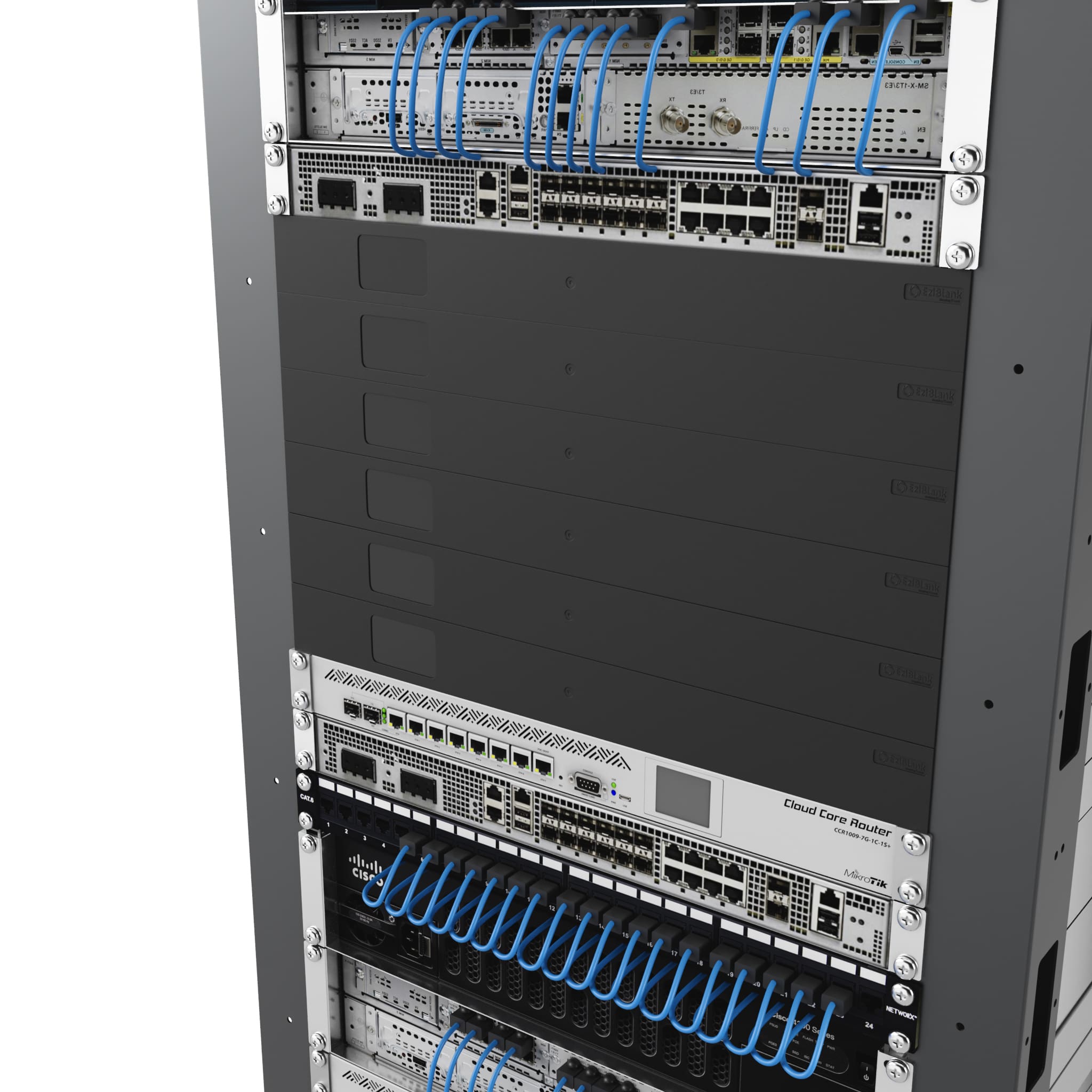
A blanking panel is a modular rack insert, typically 19-inch or 23-inch wide, designed to seal unused rack units (U) in server cabinets, preventing hot exhaust air from recirculating into cold intake zones and eliminating energy-wasting bypass airflow.
In modern data centres, where cooling accounts for 25–40% of operational expense, these seemingly simple components deliver measurable thermal control. By creating a physical barrier in empty U-spaces, blanking panels force cold supply air through active equipment intakes rather than allowing it to escape through gaps, reducing cooling load and stabilising rack temperatures.
EziBlank’s tool-free blanking panel solutions have helped data centres worldwide achieve immediate thermal improvements without construction downtime or complex installations.
Why Blanking Panels Matter for Airflow Management
Server racks operate on a simple thermal principle: cold air enters the front (intake), passes through equipment, and exits as hot exhaust from the rear. Without proper sealing, three critical failures occur:
Hot air recirculation happens when exhaust air loops back to the front intake through open slots, forcing equipment fans to work harder and triggering thermal throttling. This creates localised hot spots where temperatures exceed ASHRAE TC 9.9 recommended ranges (18–27°C for Class A1 equipment).
Bypass airflow wastes energy when cold air, intended for server cooling, passes directly through empty rack spaces without absorbing heat. Studies indicate that up to 60% of supplied air can bypass equipment in poorly managed racks, increasing cooling system demand unnecessarily.
Pressure instability disrupts hot/cold aisle containment systems. Open U-spaces allow air to cross between separated zones, degrading the pressure differential that keeps hot and cold air streams distinct.
Blanking panels address all three issues by maintaining a continuous barrier along the rack’s vertical plane, ensuring air follows its intended path from cold aisle intake through equipment to hot aisle exhaust.
Thermal Function: How Physics Reduces Energy Costs
The primary value of blanking panels lies in controlling airflow dynamics within the rack enclosure. In a properly sealed rack, cold air supplied through perforated floor tiles or overhead ducts encounters resistance at the intake plane, creating positive pressure that drives air into server fan zones.
When unused U-spaces remain open, this system collapses. Cold air takes the path of least resistance, through gaps rather than densely packed server intakes. The result: equipment fans compensate by increasing speed (consuming more power), while CRAC units detect insufficient delta-T and overcool the space.
Installing blanking panels restores the pressure gradient. Facilities typically see measurable improvements: intake temperature stabilisation that keeps front-of-rack temperatures within manufacturer specifications, PUE improvement by preventing bypass airflow, and thermal zoning that supports variable density deployments.
A 42U rack with 10 empty U-spaces can leak 200–400 CFM of conditioned air if unsealed, equivalent to the cooling capacity required for 2–3 additional 1U servers.
Standard Sizes and EIA-310 Compliance
Blanking panels conform to the EIA-310-D rack standard, which defines 19-inch width and vertical spacing measured in rack units. One rack unit (1U) equals 1.75 inches (44.45mm) of vertical height.
6RU modular panels are the industry standard for data centres, covering six consecutive rack units with snap-together segments at 1U intervals. This modular design allows for field adjustment; users can separate a 6RU panel into smaller sections to accommodate mixed equipment heights.
10SU ETSI panels serve European telecommunications infrastructure, where ETSI racks use 21-inch width and “SU” (slot unit) vertical spacing. Ten SU equals approximately 222mm, matching telecom cabinet dimensions.
23-inch panels fit oversized enterprise racks common in North American colocation facilities, where extra width accommodates cable management arms and deeper switch chassis.
Material Specifications
ABS plastic (UL94-V0 flame-retardant grade) dominates data centre deployments. Lightweight construction (typically 200–300g for a 6RU panel) reduces handling fatigue during large installations, while the snap-on design enables tool-free mounting in square-hole racks.
Aluminium and steel variants provide rigid security for access-restricted areas. Screw-mount attachment deters unauthorised removal, and the solid metal construction withstands impact in high-traffic aisles.
Brush grommets feature nylon bristles that form a seal around cable bundles passing vertically through rack openings, maintaining airflow integrity while allowing flexible cable routing.
|
Panel Type |
Material |
Height Range |
Mounting Method |
|
Modular |
ABS Plastic |
6RU (adjustable) |
Tool-free snap clips |
|
ETSI |
ABS Plastic |
10SU |
Tool-free clips |
|
Heavy-duty |
Steel/Aluminium |
1U–4U |
Screw-mount |
|
Brush |
Nylon bristles |
1U–2U |
Snap or screw |
Use Cases Across Infrastructure Types
Enterprise data centres managing hundreds of racks treat blanking panels as mandatory infrastructure. Hot aisle/cold aisle containment systems depend on continuous sealing; every open U-space compromises the containment envelope.
Colocation providers use blanking panels to maintain consistent SLAs across customer cabinets. Tool-free panels enable rapid changes as customers add or remove equipment without requiring facility engineering involvement.
Edge computing locations in office buildings often lack dedicated cooling systems. Blanking panels provide passive thermal management, preventing hotspot formation in enclosed IT closets where air circulation is limited.
Retrofit projects in older data centres benefit from blanking panels as the most cost-effective immediate intervention, requiring no construction, no downtime, and minimal labour.
Installation Best Practices
Effective deployment requires a systematic approach: audit all racks before ordering panels, prioritise high-density zones first, install from bottom to top during new builds, and verify fit after installation. Gaps between panel edges and mounting rails indicate improper sizing.
Document panel locations in DCIM systems or rack elevation diagrams. During future equipment changes, technicians need to know which panels to remove and where to relocate them.
Choosing the Right Panels
For live production racks requiring frequent changes, tool-free ABS panels offer speed and safety. For permanent installations in secure facilities, screw-mount metal panels provide tamper resistance. For cable-dense racks with vertical wire bundles, brush grommets seal openings while allowing cable movement.
Return on Investment
A typical 42U rack with 40% empty space unsealed may waste 2–3kW of cooling capacity. At $0.12/kWh with 8,760 hours annual operation, this represents $2,100–$3,150 in annual energy cost per rack. Quality blanking panels cost $15–$40 per 6RU section, delivering payback periods under 60 days.
Ready to Optimise Your Data Centre Airflow?
EziBlank’s Australian-engineered blanking panels combine lightweight durability with tool-free installation, trusted by data centres across North America, Europe, and Asia. Our 6RU modular panels snap into place in seconds, with no tools required, perfect for live production environments where speed and safety matter.
Explore our complete range of airflow management solutions, including ETSI-compliant panels, brush grommets, and custom containment systems designed for your facility’s unique requirements.
Contact our engineering team at +61 2 9690 2852 or enquiries@eziblank.com to discuss your airflow challenges and receive tailored recommendations.
Frequently Asked Questions
Do blanking panels really reduce energy costs?
Yes. By preventing bypass airflow and hot air recirculation, blanking panels reduce cooling system load. Facilities typically see 15–20% cooling energy reductions in properly sealed racks, with payback periods under 60 days based on material costs versus energy savings.
How many blanking panels do I need for a 42U rack?
Count all unused rack units. A 42U rack with 15U of equipment requires panels covering 27U of empty space. Using 6RU modular panels, you’d need approximately 5 panels (30U coverage) with adjustments for exact fit.
Are blanking panels required for compliance?
While not universally mandated, many energy efficiency certifications (ISO 50001, Uptime Institute standards) require documented airflow management. Blanking panels provide visible evidence of thermal control practices during facility audits.
Can I mix different brands or materials?
Yes, though consistent panel types simplify inventory management. Ensure all panels match your rack’s hole pattern (square versus round) and width specification (19-inch, 21-inch, or 23-inch).
What’s the difference between tool-free and screw-mount panels?
Tool-free panels use spring clips that snap into square-hole racks in seconds, ideal for environments with frequent equipment changes. Screw-mount panels require cage nuts and screws, providing permanent security in access-restricted areas or round-hole racks.
How do brush panels compare to solid blanking panels?
Brush panels allow cable bundles to pass vertically while maintaining partial airflow seal, useful at floor penetrations or cable entry points. Solid blanking panels provide complete airflow blockage for maximum thermal control where cables don’t need to cross.