
Ask a data centre operations manager about their fire suppression system and they will give you a detailed answer. FM-200, Novec 1230, VESDA detection, zoned release sequences. These are well-understood, well-documented, and regularly audited.
Now ask the same person about the fire rating of the blanking panels inside their racks. Most cannot answer. Many have never checked.
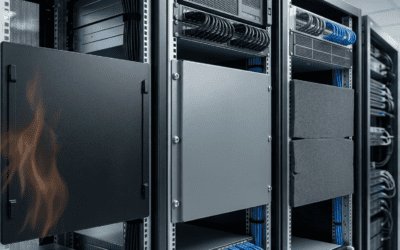
This is the compliance gap. Data centre teams invest heavily in facility-level fire protection while overlooking the fire performance of the components mounted inside the racks themselves. Blanking panels, cable management accessories, and rack-mounted plastic components sit inches from active electrical equipment, heat sources, and high-density cabling. Yet these components are rarely evaluated for fire safety during procurement.
This post explains why that gap exists, what fire safety standards actually apply to rack accessories, and what questions every operations manager should be asking their suppliers.
Why the Gap Exists
The data centre industry has historically treated fire safety as a building-level concern. Fire suppression, detection, and compartmentalization are specified by architects and fire engineers during facility design. They are covered by building codes, insurance requirements, and industry standards like NFPA 75 (Standard for the Fire Protection of Information Technology Equipment) and NFPA 76 (Standard for the Fire Protection of Telecommunications Facilities).
Rack accessories fall into a grey area. They are not part of the building. They are not classified as IT equipment. They are consumable infrastructure components that operations teams purchase and install independently. Building codes rarely specify material requirements for items mounted inside server racks. Insurance inspectors check suppression systems and cable fire ratings, but blanking panels and similar accessories often fall outside the scope of their audit checklists.
The result: a facility can have world-class fire suppression protecting racks that contain unrated flammable materials.
The Standards That Matter
Three standards are directly relevant to the fire performance of data centre rack accessories.
UL94: Flammability of Plastic Materials
UL94 is the most widely referenced standard for the flammability of plastic parts used in electrical and electronic equipment. It classifies materials on a scale from HB (the lowest, slowest-burning rating) to V-0 (the highest, self-extinguishing rating).
The key ratings are:
V-0: The material self-extinguishes within 10 seconds after the ignition source is removed. No flaming drips are produced. This is the standard that data centre rack accessories should meet.
V-1: Self-extinguishes within 30 seconds. No flaming drips. Acceptable for lower-risk applications but slower to extinguish than V-0.
V-2: Self-extinguishes within 30 seconds, but flaming drips are permitted. In a rack environment where drips could fall onto cabling, circuit boards, or other equipment, V-2 is problematic.
HB: The material burns at a controlled rate but does not self-extinguish. This rating is insufficient for any component mounted inside an active server rack.
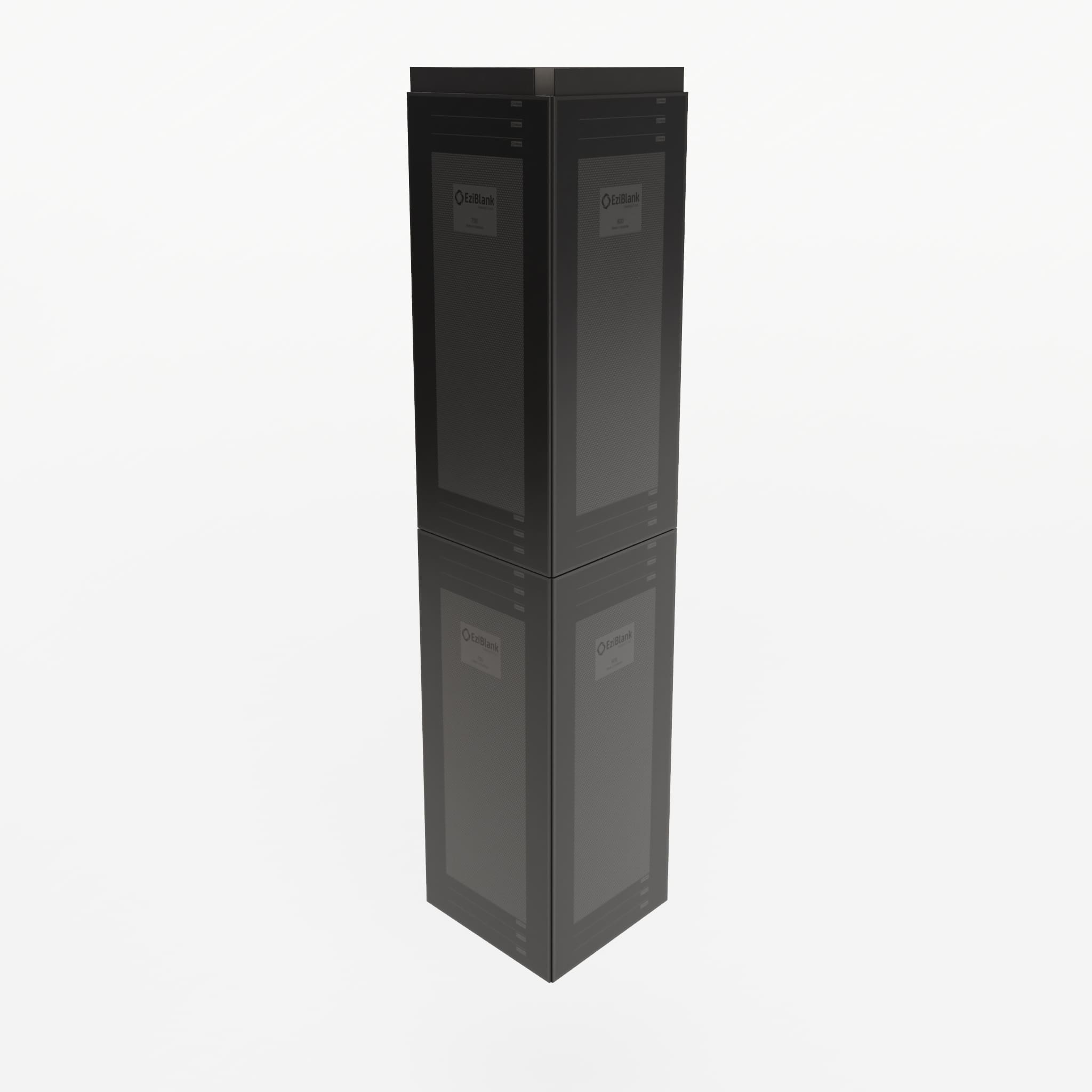
EziBlank blanking panels are manufactured from ABS rated to UL94 V-0, the highest classification in the standard. This means in the event of a thermal incident, the panel material self-extinguishes rapidly and does not contribute to fire spread within the rack.
ASHRAE TC 9.9: Thermal Guidelines for Data Processing Environments
ASHRAE’s Technical Committee 9.9 publishes the thermal guidelines that most data centres use to set operating temperature and humidity ranges. While ASHRAE TC 9.9 does not directly specify material fire ratings for rack components, it establishes the thermal envelope that equipment operates within.
The connection to fire safety is indirect but real. ASHRAE’s recommended inlet temperature range has widened over time. Facilities operating at higher ambient temperatures (following ASHRAE A2, A3, or A4 allowable ranges to reduce cooling costs) are running their racks hotter. Hotter operating environments mean that any flammable material inside the rack is closer to its ignition threshold.
As facilities push temperatures higher to save energy, the fire performance of the materials inside those racks becomes more relevant, not less.
IEC 60950 and IEC 62368: Safety of IT Equipment
IEC 60950 (now superseded by IEC 62368-1) covers the safety of information technology equipment, including fire enclosure requirements. These standards require that equipment enclosures contain or limit fire propagation.
Server racks themselves are typically tested against these standards. But the accessories mounted inside them (blanking panels, cable management arms, PDU mounting brackets) are often sourced separately from third-party vendors who may not test against the same standards.
This creates a scenario where the rack enclosure meets IEC 62368-1 fire requirements, but the accessories inside it do not. The overall fire performance of the assembled rack is only as strong as its weakest material.
What Operations Managers Should Ask Their Suppliers
The compliance gap can be closed with five straightforward questions during procurement.
1. What is the UL94 classification of this product? Acceptable answer: V-0. Anything less than V-0 should be evaluated against your facility’s fire safety policy. If the supplier cannot provide a UL94 rating at all, that is a red flag.
2. Can you provide a UL94 test certificate or material data sheet? A stated rating without documentation is not verifiable. Ask for the test certificate from an accredited laboratory or the material data sheet (MDS) from the resin manufacturer. EziBlank publishes compliance documentation for its products.
3. Does the material produce toxic fumes when exposed to heat? Some plastics release hydrogen cyanide, carbon monoxide, or other toxic gases when they burn. In a sealed data centre environment with limited ventilation during a fire event, fume toxicity matters. UL94 V-0 rated ABS has well-documented combustion characteristics with lower toxic output than many alternative plastics.
4. Does the product meet the fire safety requirements specified by your insurance provider? Some data centre insurance policies specify material requirements for components within the protected space. If your policy references NFPA 75 or similar standards, confirm that your rack accessories comply. Using non-compliant materials could affect your coverage.
5. Has the material been tested for flaming drip behaviour? This is specifically relevant in vertical rack installations where blanking panels are mounted above other equipment. A material that passes V-2 but produces flaming drips can ignite cabling or equipment below. V-0 rated materials must not produce flaming drips.
The Real Risk Is Not Fire. It Is the Audit.
For most well-maintained data centres, a fire event involving rack accessories is a low-probability scenario. Fire suppression systems, cable fire ratings, and electrical protections provide multiple layers of defence.
But audits are not low-probability. They happen annually or more frequently. And the trend in data centre auditing is toward greater scrutiny of all components within the rack, not just the servers and networking equipment.
Insurance auditors, colocation certification bodies (SOC 2, ISO 27001), and internal compliance teams are increasingly asking about the materials used in rack infrastructure. A blanking panel without a documented fire rating is a finding. A finding becomes a remediation item. A remediation item becomes budget, downtime, and management attention.
Closing the compliance gap proactively (before the auditor asks) is easier, cheaper, and less disruptive than closing it reactively.
The Material Choice Is the Compliance Decision
Fire safety compliance for rack accessories comes down to material selection. You cannot retrofit fire performance into a product after purchase. The decision happens at procurement.
Choosing blanking panels manufactured from UL94 V-0 rated flame-retardant ABS is the simplest way to close the compliance gap for rack-level airflow management components. It gives your team a documented, testable, audit-ready answer to every fire safety question.
Contact EziBlank for UL94 V-0 test certificates and material documentation.