Hyperscale AI infrastructure operates at a level where thermal inefficiency directly converts into financial loss. When thousands of GPUs are running in parallel, even small variations in airflow, cooling distribution, or rack-level containment can compound into hours of lost training time and significant cost overruns.
Companies such as Nebius, which design and operate large-scale AI clusters for training foundation models, approach thermal optimization as a system-wide discipline rather than a single cooling upgrade. Their infrastructure decisions reflect a deep understanding of how airflow, power density, reliability, and uptime interact at scale.
AI Workloads Change the Thermal Equation
AI model training places demands on data centre infrastructure that differ substantially from traditional enterprise workloads. High-performance GPUs draw significantly more power per rack, generate sustained heat loads, and operate continuously for days or weeks during training cycles.
The Nebius whitepaper highlights clusters operating at the 3,000-GPU scale, where training timelines depend on consistent GPU utilization rather than theoretical peak performance. In these environments, thermal instability does not simply raise temperatures; it increases the likelihood of throttling, interruptions, and recovery events that slow training progress.
As GPU density increases, airflow mismanagement becomes one of the most common causes of uneven cooling. Hot exhaust air recirculating back into server intakes can destabilize thermal zones, forcing cooling systems to compensate inefficiently.
Thermal Optimization Starts with Airflow Discipline
Hyperscale AI operators prioritize airflow predictability before layering advanced cooling technologies on top. That means controlling where air enters racks, how it moves through equipment, and where it exits, without relying on overprovisioned cooling to mask inefficiencies.
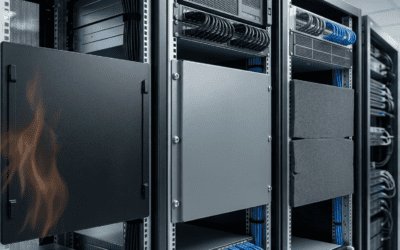
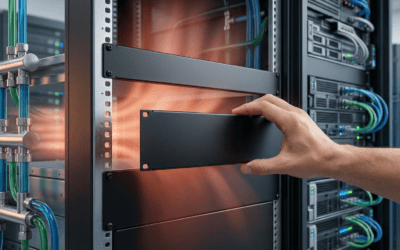
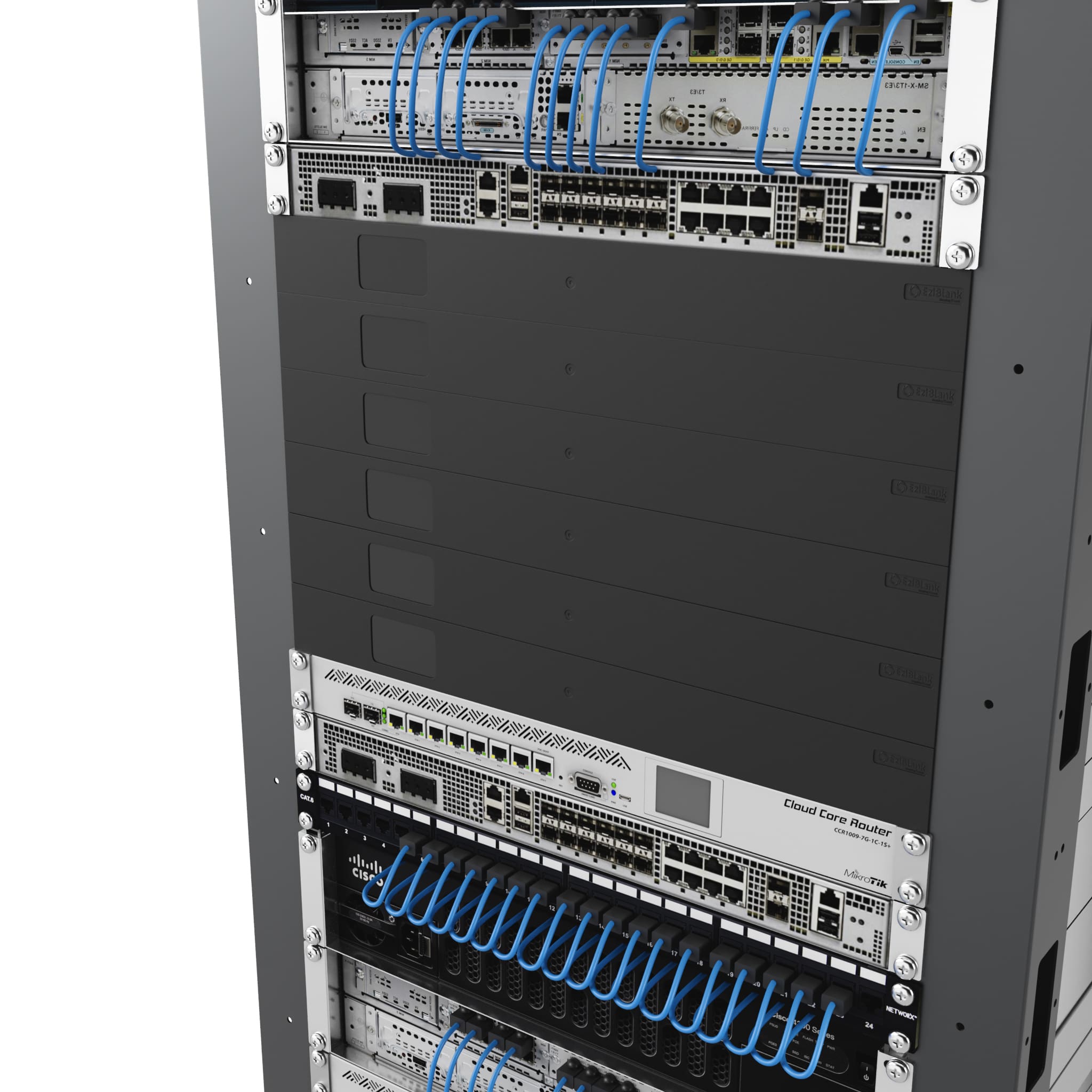
At the rack level, this includes eliminating unused spaces that allow hot and cold air to mix. Blanking panels are a foundational component of this approach, particularly in AI deployments where racks are frequently reconfigured as hardware evolves.
In environments like Nebius, where racks are densely populated and operational continuity is critical, passive airflow control helps maintain stable intake temperatures across every node in the cluster. This type of control supports consistent GPU utilization, which the whitepaper identifies as a key driver of reduced training time.
EziBlank’s tool-free blanking panels, used in Nebius racks, are designed specifically for this kind of environment, enabling airflow control without introducing maintenance complexity or deployment delays.
Containment and Thermal Zoning at Scale
Beyond individual racks, hyperscale AI data centres focus on thermal zoning across entire rows and halls. Hot aisle and cold aisle containment strategies are used to separate exhaust air from supply air, preventing temperature drift as workloads scale.
In AI-focused facilities, containment is less about meeting minimum compliance thresholds and more about maintaining uniform conditions across thousands of GPUs operating in parallel. Uneven thermal conditions can lead to localized throttling, which slows distributed training jobs even if the rest of the cluster remains stable.
Modular containment systems and wall-mounted airflow barriers allow operators to adapt layouts without compromising airflow integrity. This flexibility becomes essential as AI hardware generations change rack densities and power profiles over time.
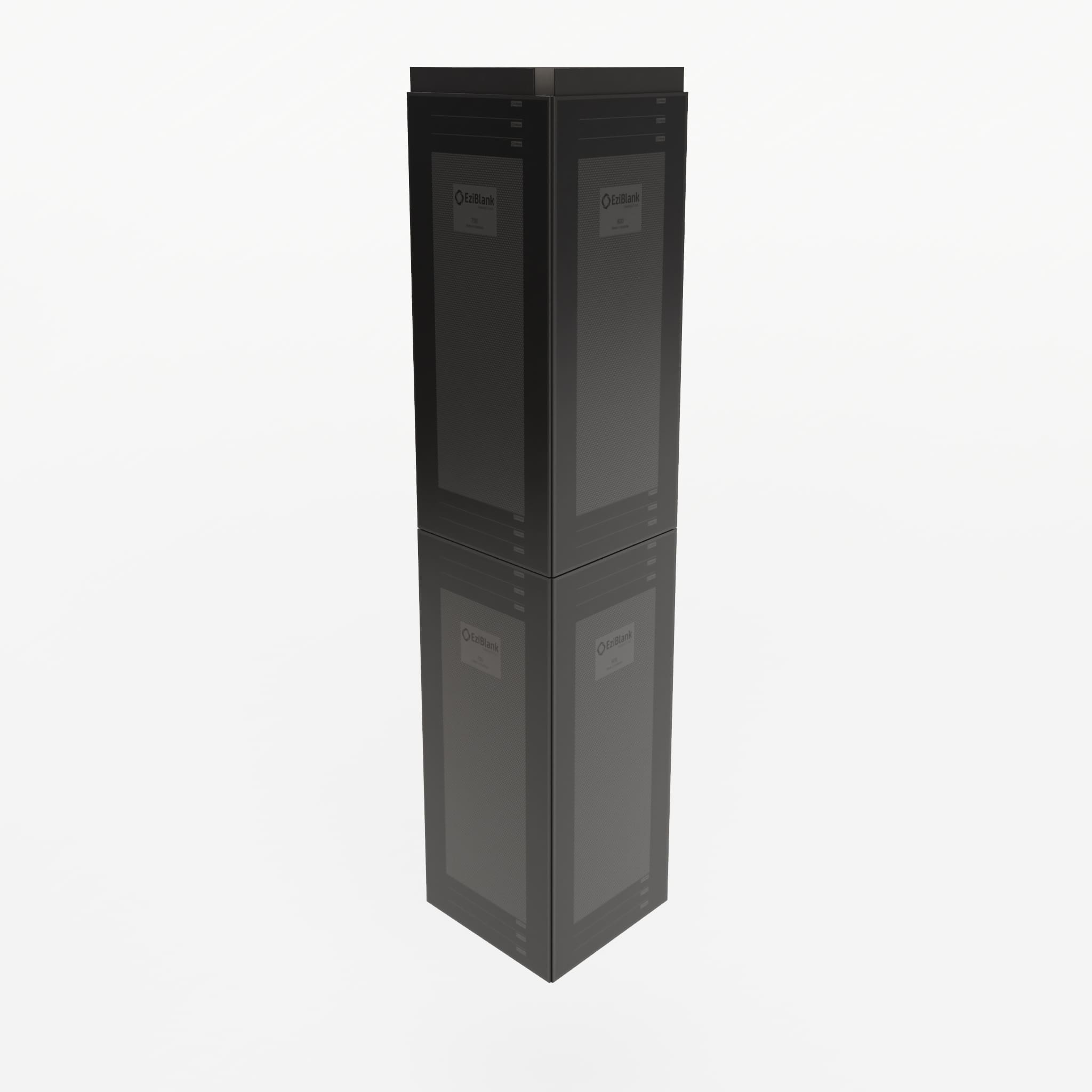
Solutions such as EziBlank Wall systems support this modular approach, allowing airflow control to evolve alongside infrastructure requirements rather than locking facilities into static designs.
Reliability, Uptime, and Thermal Stability
One of the most significant insights from the Nebius whitepaper is the relationship between infrastructure reliability and total training cost. Job interruptions, recovery time, and rollback events add measurable delays to training schedules, even when GPU pricing appears competitive.
Thermal instability contributes to these interruptions more often than it is credited for. Overheated components, uneven cooling, and airflow short-circuiting increase the likelihood of hardware faults and automated shutdowns in large clusters.
Nebius reports substantially fewer interruptions compared to baseline GPU cloud providers, supported by infrastructure choices that reduce stress on hardware. Stable airflow conditions play a role in this reliability by minimizing thermal fluctuations that accelerate component failure or trigger protective mechanisms.
Monitoring and Continuous Optimization
While passive airflow control forms the physical foundation, hyperscale AI operators pair it with real-time monitoring and simulation tools. Thermal telemetry, digital twins, and predictive analytics allow operators to detect inefficiencies before they affect workloads.
AI-focused platforms such as EkkoSense enable continuous thermal optimization by visualizing airflow patterns and temperature distribution across live environments. When paired with disciplined airflow management at the rack and containment level, monitoring tools become significantly more effective.
This layered approach ensures that optimization decisions are based on stable physical conditions rather than compensating for preventable airflow problems.
Why Passive Airflow Still Matters in AI Supercomputing
The scale and sophistication of AI infrastructure sometimes create the impression that thermal optimization is primarily a software problem. In practice, hyperscale operators continue to rely on passive airflow control because it reduces complexity rather than adding to it.
Blanking panels, containment walls, and directional airflow solutions do not consume power, do not require configuration, and do not fail under load. Their impact is cumulative, especially in environments where training jobs run continuously, and inefficiencies compound over time.
Nebius’ infrastructure demonstrates how these foundational elements support higher-level optimizations, contributing to improved GPU utilization, fewer interruptions, and measurable reductions in total training time.
Thermal Optimization as Infrastructure Strategy
For hyperscale AI companies, thermal optimization is not a standalone project or retrofit. It is embedded into infrastructure design decisions from rack layout to containment architecture.
The visibility of EziBlank panels within Nebius racks reflects a broader industry reality: even the most advanced AI clouds rely on disciplined airflow management to protect performance, reliability, and return on investment.
As AI workloads continue to scale, the importance of predictable, modular, and passive airflow control will only increase, particularly in facilities designed for sustained, high-density GPU operation.
For operators planning or expanding AI infrastructure, airflow optimization remains one of the few areas where improvements deliver immediate and compounding benefits across performance, cost, and reliability.
Explore airflow design approaches here: https://www.eziblank.com/tailor-made-solutions/