Neither cold-aisle containment nor hot-aisle containment is universally superior. Cold aisle containment (CAC) encloses server intakes to protect the conditioned air supply, while hot aisle containment (HAC) captures exhaust air and returns it to cooling units. The right choice depends on rack density, return-air path, retrofit constraints, and long-term energy targets.
Data centres lose 20–40% of cooling capacity through bypass airflow when hot and cold air mix freely, forcing CRAC and CRAH units to work harder and driving up energy costs. Both strategies address this by physically separating supply air from exhaust air, improving Power Usage Effectiveness (PUE), and reducing cooling load. What separates them is where they seal airflow, the infrastructure they require, and which operational environments they suit.
What Aisle Containment Actually Fixes
Aisle containment eliminates bypass airflow, the primary cause of uncontrolled temperature mixing in server racks.
Without containment, cold air supplied by perimeter CRAC units or raised-floor tiles mixes with hot exhaust before reaching server intakes. Cooling units compensate by supplying air at lower temperatures, consuming more energy and reducing economiser operating hours. Containment physically isolates the two airstreams, allowing supply temperatures to rise to ASHRAE-recommended levels of up to 27°C at rack inlets while maintaining consistent thermal conditions across all racks.
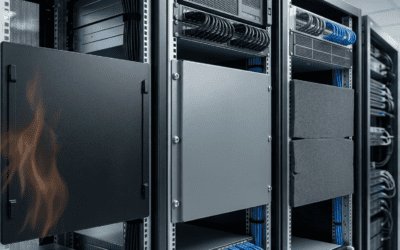
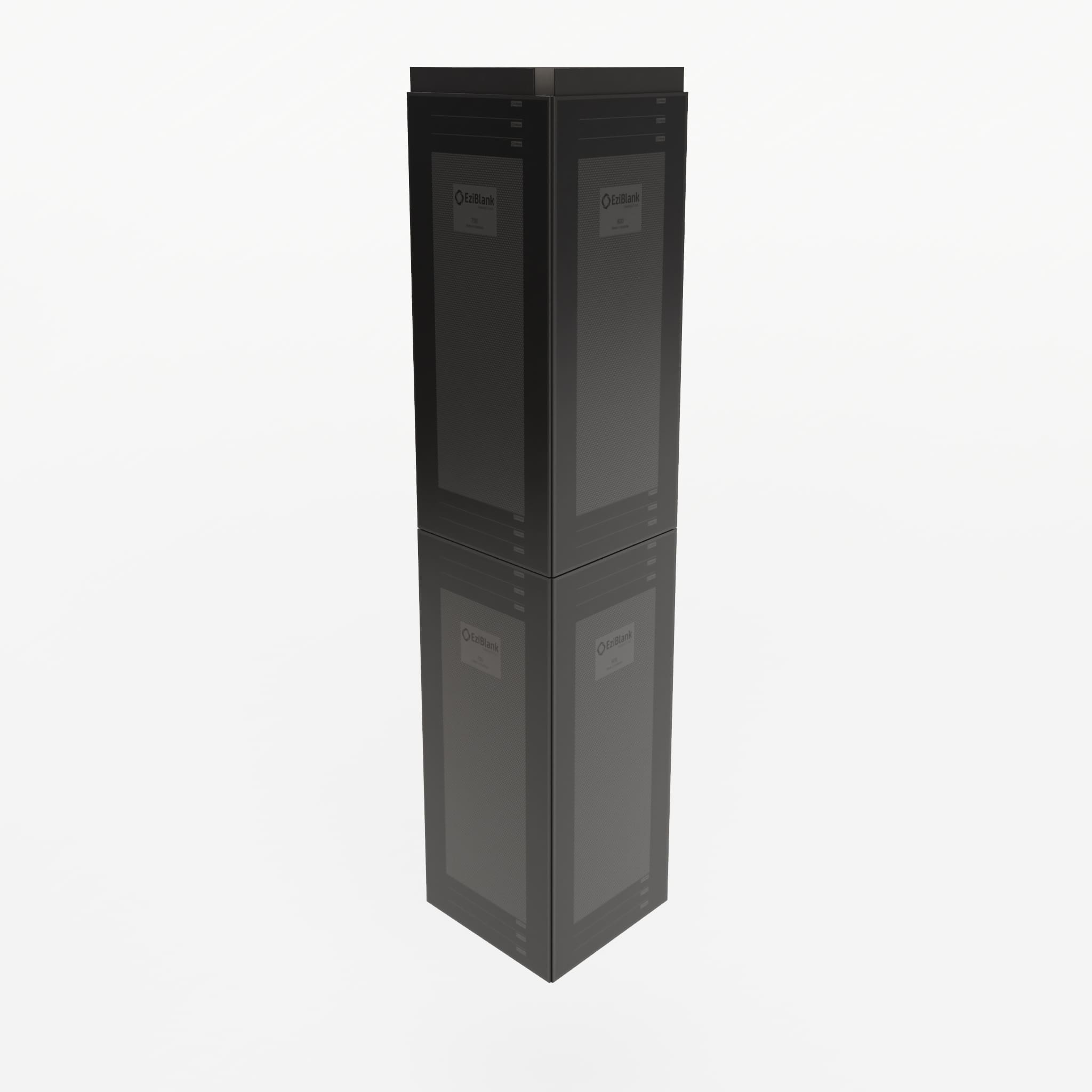
Blanking panels are foundational to both strategies. Empty rack-unit spaces allow hot exhaust to recirculate through server intakes, short-circuiting any containment system regardless of aisle sealing quality. Explore EziBlank’s blanking panel range to understand how rack-level sealing underpins containment performance.
What Is Cold Aisle Containment?
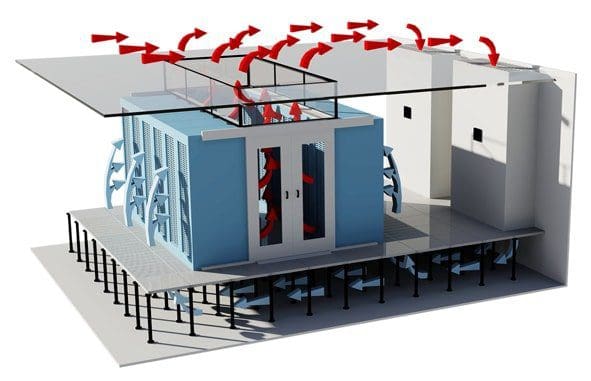
Cold aisle containment encloses the front of server racks where conditioned air enters, sealing the aisle with end doors, a roof structure, and side panels to create a pressurised cold zone at rack inlets.
CAC traps conditioned air within the enclosed aisle and directs it exclusively through server intakes. In raised-floor environments, perforated floor tiles supply air from the underfloor plenum directly into the contained cold aisle.
Where CAC fits best: Retrofitting existing data centres, particularly raised-floor facilities, because it requires fewer structural modifications. Installation does not depend on overhead return-air paths, making it practical where ceiling height or building structure limits ducting. Budget-constrained projects also favour CAC, aisle caps, and end doors, which cost less than the chimney or plenum infrastructure HAC requires.
CAC drawbacks: The rest of the data centre floor becomes the hot exhaust zone, raising ambient temperatures for technicians. Fire suppression systems may also require modification, as enclosed aisles can need independent detection and suppression coverage. Confirm compliance with local fire codes before finalising any CAC design.
What Is Hot Aisle Containment?
Hot aisle containment encloses the rear of server racks where exhaust air exits, channelling hot air directly to cooling-unit returns via ceiling plenums or rack-mounted chimney enclosures.
HAC captures exhaust air at its source before it mixes with room air, routing it back to CRAC or CRAH return inlets at higher temperatures. This increases the temperature difference (ΔT) between the supply and return, improving cooling-cycle efficiency and extending economiser operating hours in temperate climates.
Where HAC fits best: New data centre builds and high-density environments above 10 kW per rack, where return-air paths can be designed from the ground up. AI workloads and high-performance computing deployments exceeding 20–30 kW per rack benefit most from HAC’s ability to manage concentrated exhaust loads. The rest of the data centre floor stays at comfortable ambient temperatures for operations and maintenance staff.
HAC drawbacks: Higher upfront investment and more complex installation than CAC, the return-air path (ceiling plenum or chimney ducting) must be designed as part of the containment structure. Retrofitting into legacy facilities with low ceilings or complex overhead infrastructure is difficult. The contained hot aisle itself exceeds 40°C, requiring careful design of maintenance access and egress protocols.
CAC vs HAC: Decision Attributes That Matter
| Factor | Cold Aisle Containment | Hot Aisle Containment |
| Retrofit feasibility | High: suitable for existing rooms | Low to moderate: requires return-air path |
| Upfront cost | Lower | Higher |
| Energy efficiency | 20–30% cooling savings | 30–43% cooling savings |
| Rack density support | Better for low to mid-density | Better for high density (10kW+) |
| Staff working environment | The room becomes a hot zone | The room stays cool |
| Floor type | Raised floor supply preferred | Slab floor or overhead return needed |
| Fire suppression | Requires modification | Requires modification |
| Economiser compatibility | Moderate | High: higher return temps improve free cooling |
How to Choose the Right Containment Strategy
Choose Cold Aisle Containment if:
- Retrofitting an existing data centre with a raised-floor air supply
- The ceiling structure prevents overhead return ducting
- Rack densities are below 10 kW per rack
- Upfront capital budget is the primary constraint
Choose Hot Aisle Containment if:
- Designing a new build with an overhead return-air plenum
- Rack densities exceed 10 kW, or growth plans target high-density deployments
- AI workloads, GPU clusters, or high-performance computing are in scope
- Long-term energy savings and economiser optimisation are the priority
When a hybrid approach makes sense: Partial or row-based containment suits facilities where full aisle containment is impractical. EziBlank’s modular wall solutions and tailor-made containment designs support incremental deployment, sealing individual rows as density increases without committing to a full aisle build.
Implementation Checklist: What Both Strategies Require
Seal empty rack unit spaces. Blanking panels in every empty rack unit prevent hot air recirculation through server intakes. EziBlank’s 19-inch 6RU universal blanking panels and standard 6RU panels install without tools and snap into any EIA-310-D compliant rack.
Seal cable penetrations. Cable openings in rack sides, floors, and containment walls create bypass paths. EziBlank’s 1RU brush panels and durable aluminium floor grommets close these gaps without obstructing cable management.
Manage floor tile placement. In raised-floor CAC environments, perforated tile placement determines where cold air enters the contained aisle. EziBlank’s high airflow floor tiles deliver 55% open area, more than twice the volume of standard perforated tiles, and the directional airflow floor tile directs supply air at 70 degrees directly into rack inlets.
Validate with measurements. Rack inlet temperatures, delta-T readings, and hot-spot mapping confirm whether containment is performing to specification. CFD modelling is recommended for high-density environments or complex room geometries.
Common Reasons Containment Underperforms
Incomplete sealing is the most common cause. Gaps at aisle-end doors, unsealed rack spaces, open cable cutouts, and mismatched floor-tile coverage all allow air mixing, reducing efficiency gains. Cooling control setpoints miscalibrated for an uncontained layout, where CRAC units continue supplying air at temperatures designed for a mixed environment, also reduce the energy savings available after containment is installed.
Ready to Contain Your Airflow?
EziBlank designs and supplies data centre airflow management products trusted by operators across Australia, North America, Europe, and Asia, from blanking panels and brush solutions to modular wall systems and custom containment builds.
Get in Touch with EziBlank | Browse Airflow Management Products | Explore Tailor-Made Solutions
Frequently Asked Questions
Is hot-aisle containment more energy-efficient than cold-aisle containment?
HAC typically delivers higher savings in high-density environments, up to 43% in new builds optimised for overhead return paths. CAC delivers 20–30% savings in retrofit environments where HAC infrastructure is not feasible.
Which containment strategy is easier to retrofit?
Cold aisle containment. It requires only aisle caps, end doors, and a ceiling structure. HAC requires a return-air path, ceiling plenum, or rack-level chimney ducting, which involves greater structural work in existing facilities.
What rack density justifies hot-aisle containment?
Rack densities above 10 kW per rack typically favour HAC. High-density deployments exceeding 20 kW per rack, including AI and GPU workloads, generally require HAC or liquid-cooling supplementation.
Does containment affect fire suppression requirements?
Yes. Both CAC and HAC create enclosed spaces that may require independent fire detection and suppression coverage within the contained aisle. Review local fire safety codes before installing any aisle containment structure.
Do blanking panels matter if aisle containment is already installed?
Yes. Blanking panels seal rack-unit gaps that aisle containment cannot reach. Unsealed rack spaces allow hot exhaust to recirculate through server intakes even inside a fully contained aisle.