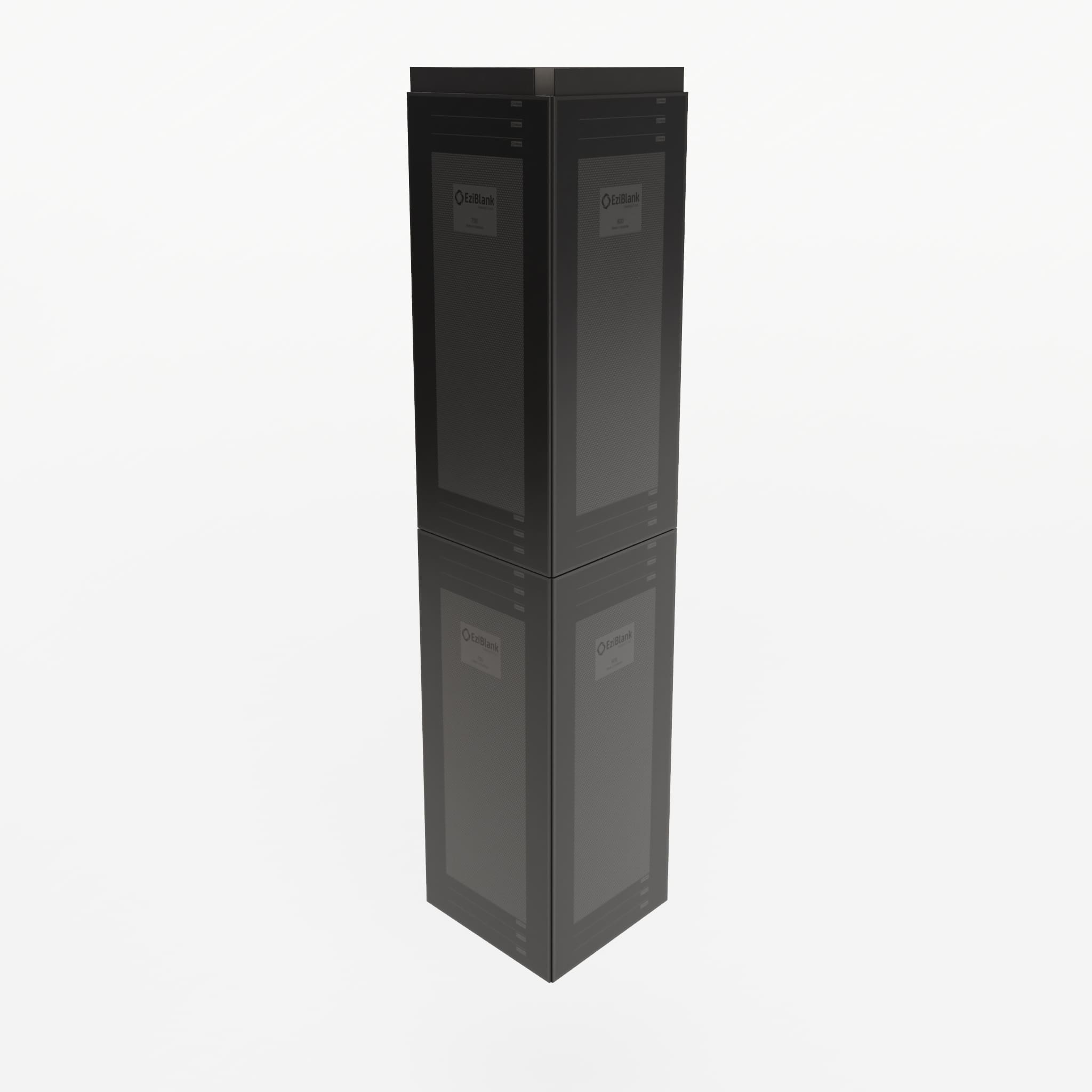
Blanking Panel vs Filler Panel: What Is the Difference?
If you have searched for blanking panels online, you have probably seen the term “filler panel” used interchangeably. In some markets, the two terms mean the same thing. In others, they describe different products with different materials, mounting methods, and performance characteristics. This page clears up the terminology and explains what actually matters when choosing the right product for your server racks.
The Short Answer: Same Job, Different Names
A blanking panel and a filler panel serve the same purpose: they seal unused rack units (U-spaces) to prevent hot air recirculation in server racks. The term “blanking panel” is more common in Australia, the UK, and across Asia Pacific. “Filler panel” is widely used in North America, particularly in the United States.
Both terms refer to a panel that covers empty rack space to maintain front-to-back airflow in a data centre or server room. The difference is not in what they do, but in how they are built and how they perform.
Where the Real Differences Appear
While the terminology is largely regional, the products sold under each name can differ significantly. The most common distinction is between traditional metal filler plates and modern modular blanking panels like those manufactured by EziBlank.
Traditional metal filler panels are stamped steel or aluminium plates, typically 1U or 2U in size, that mount to rack rails using cage nuts and screws. They have been the default option for decades and are still widely available from rack manufacturers and IT hardware distributors.
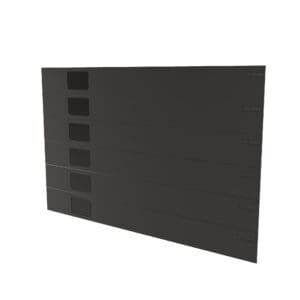
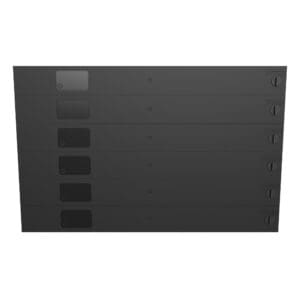
Modular blanking panels are engineered airflow management products made from flame-retardant plastic (ABS). They use tool-free snap-on mounting, ship in multi-RU blocks that break apart into individual segments, and are designed for repeated installation and removal without tools or hardware.
The table below summarizes the key differences:
Material
- Metal filler panel: Stamped steel or aluminium
- EziBlank blanking panel: Flame-retardant ABS plastic (UL94-V0)
Mounting method
- Metal filler panel: Cage nuts and screws (tools required)
- EziBlank blanking panel: Tool-free snap-on clips
Installation time per panel
- Metal filler panel: 1 to 3 minutes (including cage nut insertion)
- EziBlank blanking panel: Under 10 seconds
Panel sizes available
- Metal filler panel: Typically 1U or 2U individual plates
- EziBlank blanking panel: 6RU blocks that snap apart into 1U segments
Reusability
- Metal filler panel: Limited (bends during removal, cage nuts strip)
- EziBlank blanking panel: Fully reusable with no degradation
Weight
- Metal filler panel: Heavy (adds load to rack rails)
- EziBlank blanking panel: Lightweight
Fire rating
- Metal filler panel: Non-combustible (inherent to metal)
- EziBlank blanking panel: UL94-V0 (self-extinguishing within 10 seconds)
Injury risk during installation
- Metal filler panel: Sharp edges, cage nut pinch injuries common
- EziBlank blanking panel: Smooth plastic, no sharp edges
shop our range
-
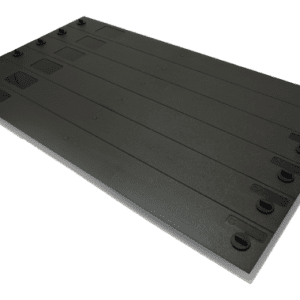
19″ 6RU Universal Blanking Panel
Price range: $186.00 through $200.00 AUD -

21″ 10SU Universal Blanking Panel for ETSI Rack
Price range: $240.00 through $250.00 AUD -
23″ 6RU Universal Blanking Panel
$250.00 AUD -
19” 6RU Standard Blanking Panel
Price range: $145.00 through $186.00 AUD -
New 19″ 6RU Universal Blanking Panel
Why Installation Speed Matters More Than You Think
In a 10-rack server room, the difference between a 2-minute and a 10-second installation per panel is minor. In a 500-rack data centre, it is the difference between a multi-day project and a half-day task.
Metal filler plates require a cage nut insertion tool, a screwdriver or drill, and physical access to both the front and sometimes the rear of the rack rail. Each 1U plate needs two to four cage nuts installed before the plate can be screwed into position. Across hundreds of racks, this adds up to significant labour hours.
EziBlank blanking panels snap in from the front of the rack with bare hands. No tools, no cage nuts, no hardware. A single technician can fill a 42U rack in under two minutes. For large deployments, this translates directly into lower labour costs and faster project completion.
The Cage Nut Problem
Anyone who has worked in a data centre has a cage nut story. These small metal clips are inserted into square-hole rack rails to provide threaded mounting points for screws. They are fiddly to install, easy to drop (often into running equipment below), and notorious for pinching fingers and knuckles during insertion.
Over time, cage nuts wear out. The spring tabs that hold them in the rail lose tension, causing panels to loosen and eventually fall out. Stripped cage nuts require replacement before a new panel can be mounted in the same position. In facilities that reconfigure racks frequently, cage nut maintenance becomes an ongoing nuisance.
EziBlank panels bypass this problem entirely. The snap-on clips engage directly with the rack rail holes, whether square, round, or threaded (on Universal models). No cage nuts are used at any point. The clips are moulded into the panel body and do not wear out or lose grip over repeated installation cycles.
Airflow Performance: Is There a Difference?
Both metal filler plates and EziBlank blanking panels create an effective airflow seal when properly installed. The physics are the same: cover the open space, prevent hot exhaust air from recirculating into the cold aisle, and maintain the pressure differential that drives front-to-back cooling.
The practical difference is in coverage consistency. Metal filler plates are sold as individual 1U or 2U units. Filling a 12U gap requires six to twelve separate plates, each individually mounted with cage nuts. If any plate is missing, loose, or poorly seated, the gap remains a source of air leakage.
EziBlank panels ship as 6RU blocks that cover large sections of open space with a single piece. Fewer joints mean fewer potential leak points. And because installation is so fast, technicians are more likely to fill every open space rather than skipping racks to save time.
Which Should You Choose?
If your facility already uses metal filler plates and they are performing well, there is no urgent need to replace them. But if you are purchasing new panels, planning a facility-wide blanking panel deployment, or dealing with the ongoing frustration of cage nuts and loose plates, modular blanking panels are the better investment.
Choose EziBlank blanking panels when:
- You need to deploy across many racks quickly
- Your team reconfigures racks regularly and needs panels that move without tools
- You operate a mixed rack environment with different rail types (the universal blanking panel handles square, round, and threaded rails)
- You want to eliminate cage nut injuries and tool requirements
- You need UL94-V0 fire-rated materials for compliance
To see the full range of panel sizes and mounting options, visit the blanking panel comparison. For pricing or bulk orders, contact the EziBlank team.
Frequently Asked Questions
Are blanking panels and filler panels the same thing?
In most contexts, yes. Both terms describe panels that cover unused rack spaces to control airflow. “Filler panel” is more common in North America, while “blanking panel” is standard in Australia, the UK, and Asia Pacific. The key difference is between traditional metal plates and modern modular panels like EziBlank.
Can I replace my existing metal filler plates with EziBlank panels?
Yes. Remove the metal plates and their cage nuts, then snap EziBlank panels into the same rack positions. No rail modification is needed. The 19 inch standard blanking panel fits square-hole rails, and the Universal model fits all rail types.
Do metal filler panels block airflow better than plastic blanking panels?
No. Both create an equivalent airflow seal when properly installed. The advantage of modular blanking panels is installation speed and coverage consistency, which means fewer gaps across the facility and better overall airflow performance.
Why do some vendors call them "blank panels" or "slot covers"?
The terminology varies by region and manufacturer. Blank panels, slot covers, filler panels, blanking plates, and rack fillers all describe the same category of product. What matters is the material, mounting method, and fire rating, not the name.
Is there a cost difference between metal and plastic blanking panels?
Metal filler plates are sometimes cheaper per unit at the 1U level. However, when you factor in cage nut costs, tool requirements, installation labour time, and replacement frequency due to bending and wear, modular blanking panels typically deliver a lower total cost of ownership over the life of the facility.