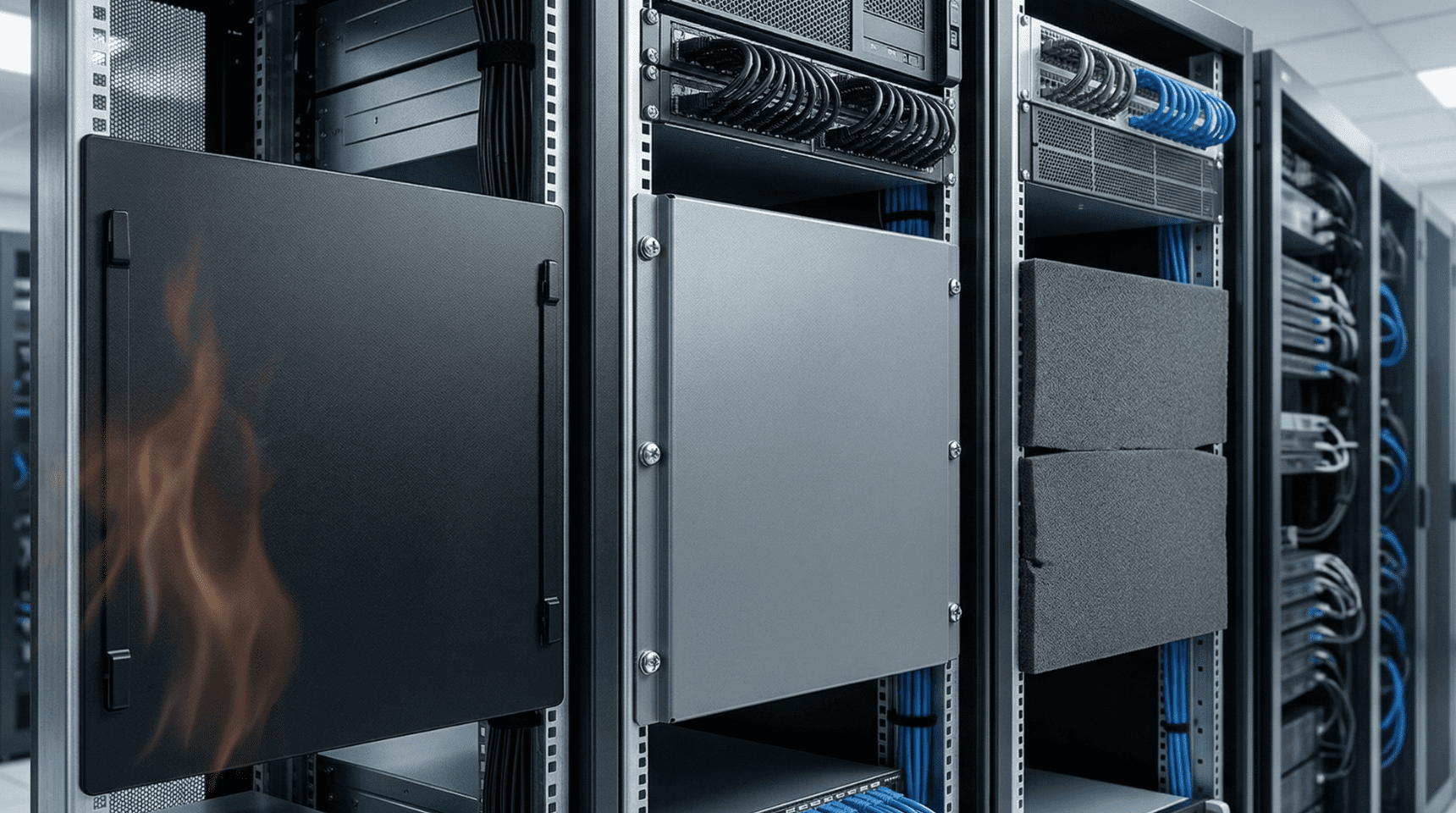
Not all blanking panels are made from the same material. And the material you choose affects far more than appearance. It determines fire safety, airflow sealing, weight load on your rack, reusability, and long-term cost.
Most data centre teams pick blanking panels based on price or availability. That is a mistake. The material inside your rack needs to match the environment it operates in. A panel that works fine in a low-density server room can become a fire risk or a structural problem in a high-density colocation suite.
This post breaks down the three most common blanking panel materials, what each one does well, where each one falls short, and how to match the right material to your specific rack environment.
ABS Plastic: The Performance Standard
ABS (Acrylonitrile Butadiene Styrene) is the most widely used material for modern blanking panels. There are good reasons for that.
ABS panels are lightweight. A standard 1RU ABS panel weighs a fraction of its steel equivalent. In a 42U rack where you might fill 20 or more open rack units, that weight difference adds up. It matters for shipping, for handling during installation, and for the total load on your rack rails.
The real advantage of ABS is fire performance. Not all ABS is the same, though. The specification to look for is UL94 V-0, which is the highest flammability rating in the UL94 standard. A UL94 V-0 rated material will self-extinguish within 10 seconds of the ignition source being removed. It will not drip flaming particles onto equipment below.
This matters because data centres are full of electrical equipment, cabling, and heat sources. If a thermal event occurs, the materials inside your rack either help contain the situation or make it worse.
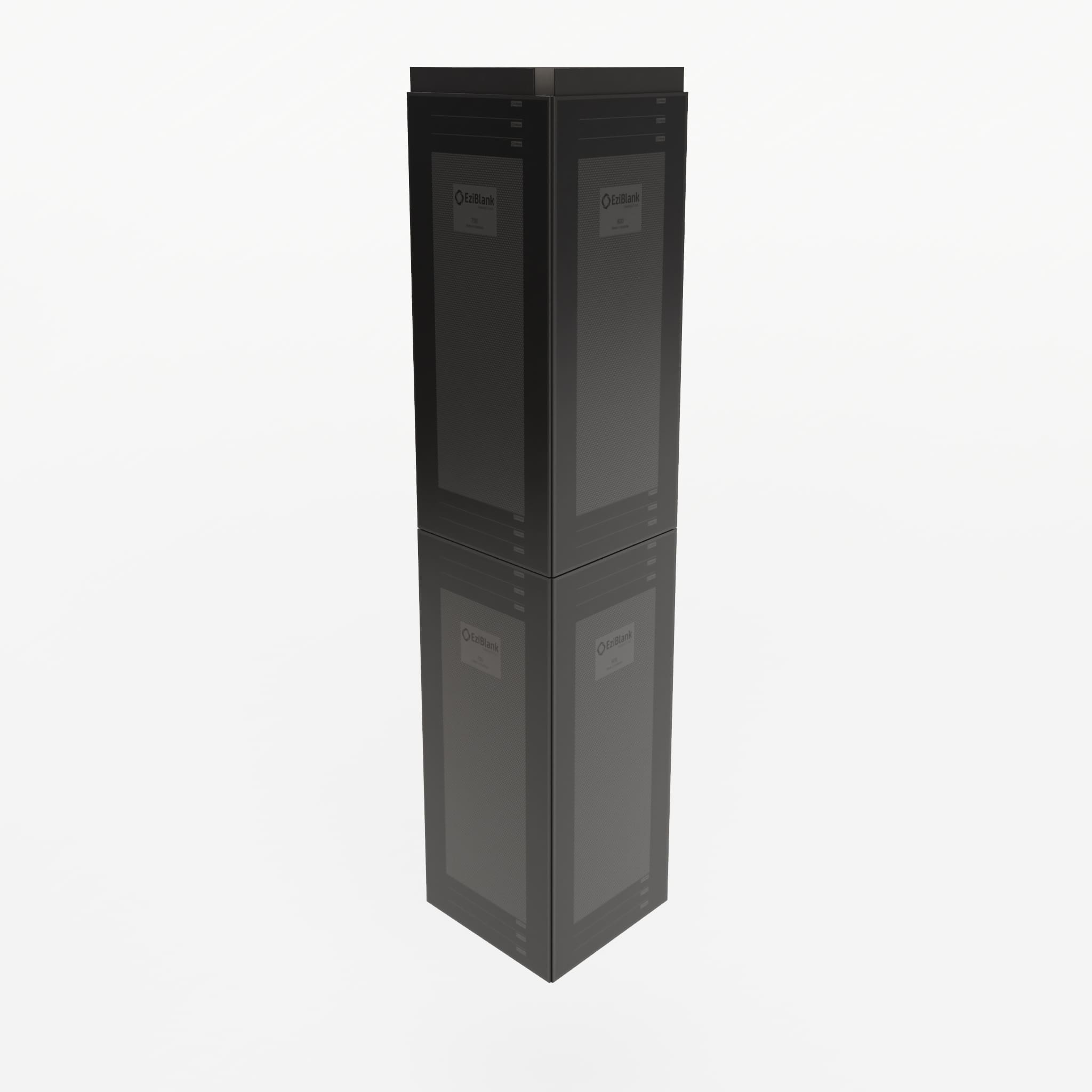
EziBlank’s blanking panels are manufactured from flame-retardant ABS rated to UL94 V-0. Not every vendor publishes their fire ratings. If your current supplier cannot provide a UL94 test certificate for their panels, that is worth investigating.
ABS also handles repeated installation and removal well. Panels with a modular snap-fit or tool-free design can be repositioned dozens of times without cracking or losing their grip. That makes ABS a strong choice for dynamic environments where rack configurations change regularly.
Where ABS Falls Short
ABS is a plastic. In environments with extreme chemical exposure (certain industrial edge deployments, for example), prolonged contact with solvents or harsh cleaning agents can degrade the surface over time. This is a narrow use case, but worth noting if your facility has unusual environmental conditions.
ABS panels also vary widely in quality between manufacturers. Thin-walled, low-grade ABS will flex, crack at the mounting points, and lose its seal after a few installation cycles. The material specification alone does not tell the whole story. Manufacturing quality and panel design matter just as much.
Steel: Heavy, Durable, and Limited
Steel blanking panels have been around longer than any other type. They are simple: a flat piece of painted or powder-coated steel with mounting tabs or screws.
The primary advantage of steel is perceived durability. Steel panels do not flex. They do not crack. They can take physical abuse in rough handling environments. For facilities where panels are installed once and left in place for years, steel works fine.
Steel is also the default material for vendors who sell blanking panels as an afterthought alongside their rack hardware. If you buy a rack from a major cabinet manufacturer and add blanking panels to the order, you will likely receive steel panels.
Where Steel Falls Short
Weight is the obvious issue. A full set of steel blanking panels in a 42U rack adds meaningful weight to the rack structure. In seismic zones or facilities with strict weight-per-tile limits on raised floors, this matters.
Steel panels are also harder to install and remove. Most require cage nuts or screws. That means tools, more time per panel, and a higher chance that technicians will skip installation when they are under time pressure. In a data centre where rack configurations change frequently, the friction of screw-mounted steel panels often means panels simply do not get reinstalled after a server swap.
Fire performance is not a concern with steel itself, but the paint or powder coating can produce fumes when exposed to extreme heat. This is rarely a deciding factor, but it is part of the full material picture.
The biggest practical problem with steel panels is that they do not adapt to different rack brands or rail positions. A steel panel made for one manufacturer’s rack may not fit another. Universal blanking panels solve this problem by adjusting to multiple rail widths and mounting positions.
Foam: Cheap, Fast, and Problematic
Foam blanking panels (sometimes called foam baffles or filler strips) are the lowest-cost option available. They are typically sold as adhesive-backed strips or friction-fit inserts that press into open rack units.
Foam is fast to install. Peel, stick, done. For temporary deployments, lab environments, or situations where you need to seal open rack units immediately with whatever is on hand, foam can serve as a short-term fix.
Where Foam Falls Short
The list of problems with foam is long.
Fire safety is the most serious concern. Most foam materials used in low-cost blanking solutions are not rated to UL94 V-0. Some are not fire-rated at all. In a rack filled with active electrical equipment generating heat, placing unrated flammable material is a risk that no operations manager should accept.
Seal quality degrades quickly. Foam compresses over time, especially in warm environments. As it compresses, gaps form around the edges. Those gaps allow bypass airflow, which is the exact problem blanking panels exist to solve. A foam panel that sealed well on day one may be leaking air within months.
Reusability is effectively zero. Once you remove an adhesive-backed foam strip, it does not go back cleanly. Residue stays on the rack rails. The foam itself deforms. In any environment where racks change configuration more than once, foam becomes waste.
Foam also has no structural rigidity. It cannot support labelling, cable management clips, or any accessory that clips to the panel face. It is a single-purpose product with a short useful life.
How to Choose the Right Material
The decision comes down to three questions.
What is the fire safety standard in your facility? If your data centre requires UL94 V-0 compliance for rack-mounted components (and increasingly, auditors are asking for this), foam is eliminated and steel requires coating verification. ABS panels with documented fire certifications give you audit-ready compliance.
How often do your rack configurations change? If servers move quarterly or more frequently, you need panels that install and remove without tools and survive dozens of cycles without damage. ABS with tool-free mounting is the clear choice. Steel with screws adds friction. Foam is single-use.
What is the total cost over 5 years? Foam is cheapest per unit but needs replacing repeatedly. Steel lasts but adds labour cost at every rack change. ABS panels with modular, reusable designs deliver the lowest lifecycle cost because they survive the full lifespan of the rack itself.
The Material Conversation Matters
Most blanking panel purchases happen on autopilot. Someone orders whatever is cheapest or whatever the rack vendor bundles in. That approach ignores the fact that the material inside your rack affects fire safety, cooling performance, operational speed, and long-term cost.
Ask your supplier three questions: What is the UL94 rating? How many installation cycles will the panel survive? And can you provide test documentation?
If they cannot answer all three, it is time to look at alternatives.
Talk to the EziBlank team about material specifications and fire compliance for your facility.