Data Center Airflow Audit Checklist
An airflow audit is the fastest way to find where your data centre is losing cooling capacity. Hot spots, bypass airflow, open rack spaces, and unsealed cable cutouts all drain cooling efficiency without being obvious during normal operations. A structured walk-through catches these issues before they become outages.
This checklist covers the physical inspection points that operations teams can assess without specialised tools or external consultants. Print it, walk the floor, and document what you find. The results will tell you where to focus your airflow management improvements and how much cooling capacity you can recover.
Rack-Level Inspection
The rack is where airflow management starts. Every rack in the facility should be checked for these items:
Open U-spaces. Count the number of unsealed rack units in each rack. Every open U-space allows hot exhaust air to recirculate into the cold aisle. Record the total open U-spaces per row and across the facility. This number directly determines how many blanking panels for server racks are needed to close the gaps.
Blanking panel coverage. If blanking panels are already installed, check for panels that have fallen out, been removed during maintenance and not replaced, or are damaged. Partial coverage still leaves recirculation paths. The goal is 100% of unused U-spaces sealed.
Panel fit and condition. Confirm that installed blanking panels sit flush against the rack rails with no visible gaps at the top, bottom, or sides. Panels that are warped, cracked, or poorly seated are not forming an effective seal. Metal filler plates should be checked for bent edges and loose cage nuts.
Cable management at the rack. Cables exiting the rear of the rack should be routed through brush panels or grommets, not draped over the top of the rack or run through open U-spaces. Cable bundles that block airflow paths reduce cooling effectiveness even when blanking panels are in place.
Equipment orientation. Verify that all servers, switches, and storage devices are mounted with their air intake facing the cold aisle and exhaust facing the hot aisle. A single device mounted backwards pushes hot air into the cold aisle and disrupts the thermal environment for the entire rack.
Row-Level Inspection
Step back from the individual rack and assess airflow at the row level:
Aisle containment integrity. If hot or cold aisle containment is installed, walk the length of each contained aisle. Check for gaps between containment panels, doors that do not close fully, ceiling baffles that have shifted, and end-of-row openings that have been left unsealed. Any gap in the containment barrier allows air mixing and reduces the effectiveness of the system. Learn more about aisle containment solutions.
Rack alignment. Racks in each row should form a continuous front plane. Racks that are pushed back, pulled forward, or offset from the row create gaps between cabinets that allow air to bypass the containment system.
End-of-row sealing. The ends of each row are common air bypass paths. Check that end-of-row panels, doors, or curtains are installed and sealed. Open row ends allow cold air to escape from the cold aisle without passing through any equipment.
Above-rack gaps. In facilities without ceiling-level containment, check for gaps between the tops of the racks and any overhead obstructions (cable trays, lighting, ceiling tiles). Hot air rises and will find any path from the hot aisle to the cold aisle above the rack tops.
Raised Floor Inspection
For facilities with raised floor cooling, the underfloor plenum is the primary cold air delivery system. Leaks in the plenum reduce the air pressure and volume available to the racks:
Floor tile placement. Perforated and directional floor tiles should be positioned directly in front of the racks they serve, in the cold aisle. Perforated tiles in the hot aisle or in unoccupied areas waste cold air. Record the position of every perforated tile and compare it to the rack layout.
Cable cutouts and grommets. Every cable penetration through the raised floor is a potential air leak. Check that all cable cutouts are sealed with grommets or brush strips. Unsealed cutouts can leak significant volumes of cold air into the space below the floor rather than delivering it to the racks.
Damaged or missing tiles. Walk the entire floor and check for cracked tiles, missing tiles, tiles that do not sit flat, and gaps between tiles. Each of these is an air leak that reduces plenum pressure.
Under-floor obstructions. Cables, pipes, and abandoned infrastructure under the raised floor can block airflow and create pressure imbalances. If underfloor congestion is visible through perforated tiles, the plenum may need cleaning or reorganisation to restore proper air distribution.
shop our range
-
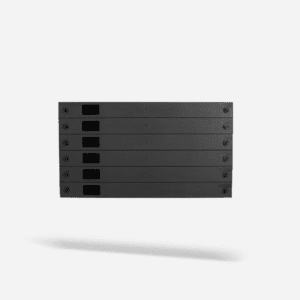
19″ 6RU Universal Blanking Panel
Price range: $186.00 through $200.00 AUD -

21″ 10SU Universal Blanking Panel for ETSI Rack
Price range: $240.00 through $250.00 AUD -
23″ 6RU Universal Blanking Panel
$250.00 AUD -
19” 6RU Standard Blanking Panel
Price range: $145.00 through $186.00 AUD -
New 19″ 6RU Universal Blanking Panel
Temperature Measurement Points
If you have access to temperature sensors or a handheld thermal measurement tool, record readings at these locations:
Rack inlet temperatures. Measure at the top, middle, and bottom of the cold aisle face of each rack. ASHRAE recommends inlet temperatures between 18 and 27 degrees Celsius (A1 class). Temperatures above 27 degrees at any point indicate a localised cooling problem.
Hot aisle exhaust temperatures. Measure at the rear of racks in the hot aisle. Exhaust temperatures above 45 degrees Celsius suggest the rack is generating more heat than the airflow can efficiently remove.
Temperature differentials. Compare inlet temperatures at the top and bottom of the same rack. A large difference (more than 5 degrees) suggests hot air is recirculating over the top of the rack or through open U-spaces.
Documenting Your Findings
For each row and rack, record:
The number of open U-spaces. The number and condition of installed blanking panels. Any containment gaps, unsealed cutouts, or misplaced floor tiles. Temperature readings at rack inlets and hot aisle exhausts. Any equipment mounted in the wrong orientation.
This data gives you a clear picture of where your facility is losing cooling capacity and where the highest-impact fixes are. In most facilities, sealing open rack spaces with blanking panels and closing floor cutouts with grommets recover the most cooling capacity for the lowest cost.
What to Do With Your Audit Results
Once you have completed the walk-through, prioritise fixes by impact:
Start with blanking panels. Sealing open rack spaces is the single fastest improvement to data centre airflow. It requires no downtime, no tools (with EziBlank panels), and delivers measurable results within hours of installation. To estimate savings from closing gaps, use the ROI calculator.
Next, address floor leaks. Seal cable cutouts with grommets, replace damaged tiles, and reposition misplaced perforated tiles.
Then assess containment. If your facility does not have aisle containment, the audit data will show whether the temperature differentials justify the investment. If containment is already installed, fix any gaps or damaged panels identified during the walk-through.
Finally, review against standards. Compare your findings to the thermal guidelines in ASHRAE TC 9.9, EN 50600, and any applicable Uptime Institute tier requirements. For compliance documentation on EziBlank products, including UL94-V0 fire ratings, visit the certifications page.
For help planning your airflow improvements based on audit findings, contact the EziBlank team for server airflow management solutions tailored to your facility.
Frequently Asked Questions
How often should I audit data centre airflow?
At minimum, once per quarter. Additionally, run a targeted audit after any major rack move, equipment installation, or cooling system change. Facilities with high change rates (colocation environments, cloud providers) benefit from monthly walk-throughs of the highest-density rows.
Can I do this audit without specialised equipment?
Yes. The physical inspection items (blanking panels, containment gaps, floor tiles, cable cutouts) require no tools beyond a clipboard and a flashlight. Temperature measurements can be taken with a handheld infrared thermometer, which most operations teams already have.
What is the most common problem found during airflow audits?
Open rack spaces. In most facilities, blanking panel coverage is incomplete. Panels are removed during maintenance, not replaced after equipment moves, or never installed in the first place. This is also the easiest and cheapest problem to fix.