Sustainable Data Centre Products: Recyclable, Efficient, Green
Sustainability in the data centre is no longer a side conversation. Hyperscalers commit to net-zero targets, colocation customers demand carbon reporting, and regulators in Europe, Asia, and increasingly the United States want measurable environmental data. The question is not whether your data centre should be greener, but how to do it without sacrificing uptime or blowing the budget.
A lot of the focus goes to the big-ticket items: renewable power contracts, liquid cooling, AI-driven workload management. Those matter. But the simplest, cheapest sustainability gains often come from the products that physically move and contain air inside your facility. This page covers the EziBlank product range built around recyclability, energy efficiency, and lower-carbon operations.
What Makes a Data Centre Product Sustainable?
Three things, mostly:
- Long service life. A product that lasts 10 to 15 years and can be redeployed across rack moves has a fraction of the lifetime carbon footprint of a product that gets thrown out every few years.
- Recyclable materials. When the product reaches end of life, the materials go back into the supply chain rather than to landfill.
- Energy efficiency in operation. The product helps the data centre use less cooling, less fan power, and less total electricity throughout its working life.
The best sustainable products tick all three boxes. EziBlank’s range was designed around exactly this combination.
Recyclable Blanking Panels
Blanking panels are the cheapest, fastest cooling improvement available to most data centres. They also have a strong sustainability story when chosen well.
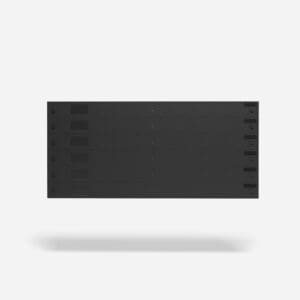
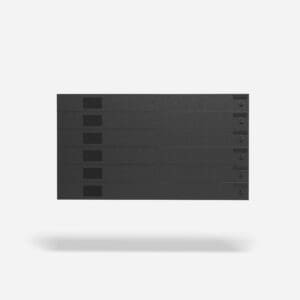
EziBlank’s recyclable blanking panels are built to be reused across rack moves, server refreshes, and facility reconfigurations. The universal mounting design means a panel installed today fits the rack you redeploy it into in five years. No single-use plastic, no proprietary fasteners that lock you into one rack model.
When a panel does reach end of life, the materials are recyclable through standard streams. That keeps them out of landfill and feeds back into new product cycles.
For a deeper look at how panels hold up over time and what their reuse value looks like, see our analysis of blanking panel lifecycle and reusability.
Energy Efficiency: The Largest Carbon Lever
Cooling typically accounts for 30 to 45 percent of total data centre electricity use. Anything that reduces cooling demand cuts both the operating bill and the operational carbon footprint. EziBlank’s airflow management range targets this directly.
Blanking Panels Stop Recirculation
A rack with open units lets hot exhaust loop back to the front, raising server inlet temperatures. Cooling units respond by working harder. Sealing the rack with blanking panels stops the loop and lets cooling units run at lower fan speeds.
Brush Panels Seal Cable Pass-Throughs
Open cable pass-throughs short-circuit airflow inside the rack. EziBlank brush panels and Flex Brush products seal these openings while keeping cables accessible, removing another source of cooling waste.
Floor Tiles Deliver Air Where It Is Needed
Directional and high-airflow floor tiles deliver cold air to the racks that need it, instead of dispersing it across the room. This means fewer cooling units running, lower fan energy use, and a smaller cooling carbon footprint per rack.
Modular Wall Panels Contain Aisles
Aisle containment locks cold air into the cold aisle and hot exhaust into the hot aisle, preventing the two from mixing. The efficiency gain is large and immediate: most facilities see meaningful drops in cooling energy use after containment is installed.
The combined effect of these airflow improvements is what powers the carbon reduction story. You can calculate energy savings for your own facility using our ROI tool.
Monitoring: The Other Half of the Sustainability Story
Sustainable infrastructure only delivers when you can measure what it does. EziBlank distributes monitoring and analytics platforms that turn airflow improvements into reportable carbon and energy data.
EkkoSense for energy optimization gives you live thermal and energy data across the data centre floor, identifies hot spots, and quantifies the energy impact of changes you make. Pair an airflow upgrade (blanking panels, containment, tile placement) with EkkoSense monitoring and you get measurable, defensible numbers for sustainability reports.
For broader monitoring across power, network, and asset use, the full EziBlank software and monitoring range covers DCIM, patch and asset management, and power monitoring tools.
shop our range
-
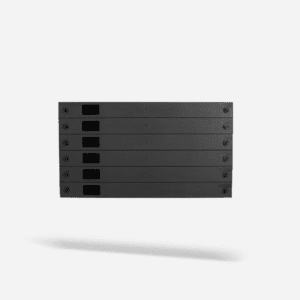
19″ 6RU Universal Blanking Panel
Price range: $186.00 through $200.00 AUD -

21″ 10SU Universal Blanking Panel for ETSI Rack
Price range: $240.00 through $250.00 AUD -
23″ 6RU Universal Blanking Panel
$250.00 AUD -
19” 6RU Standard Blanking Panel
Price range: $145.00 through $186.00 AUD -
New 19″ 6RU Universal Blanking Panel
Certifications and Compliance
Sustainability claims need backing. EziBlank products are documented for compliance with environmental and safety standards used across the data centre industry. Full documentation is available in our environmental certifications library.
For sustainability and procurement teams who need to evidence supplier environmental credentials in tenders, RFPs, or ESG reports, these documents support the claims made in this page.
Reducing Your Carbon Footprint With EziBlank
A practical sustainability plan for an existing data centre usually follows this sequence:
- Install blanking panels in every open RU. Cheapest, fastest cooling gain.
- Seal cable pass-throughs. Brush panels at rack openings, grommets at floor entries.
- Audit floor tile placement. Move tiles to match rack density. Remove tiles from hot aisles and walkways.
- Add containment (where layout allows). Cold or hot aisle containment delivers the biggest single efficiency gain after blanking panels.
- Install monitoring. Use EkkoSense or equivalent to quantify gains and identify the next opportunity.
- Plan refresh cycles around recyclable products. When equipment retires, pick replacements with documented end-of-life pathways.
Each step lowers operating energy and feeds into your sustainability reporting. None require new building work or major capex.
Talk to EziBlank About a Greener Facility
If sustainability is on your roadmap, we can help you map out where the easiest wins are. Contact EziBlank for product specs, ROI numbers, and environmental documentation.
Frequently Asked Questions
Are blanking panels actually recyclable?
Yes, when chosen well. EziBlank blanking panels are built from recyclable materials and designed for repeated reuse across rack moves and facility changes. At true end of life, the materials feed back into standard recycling streams.
How much energy can sustainable airflow products save?
The savings depend on your starting state. A data centre running with many open rack units, unsealed cable cutouts, and untuned tile placement can see substantial cooling energy reductions after addressing those issues. Use our ROI calculator for a facility-specific estimate.
Do sustainable products cost more upfront?
Not usually. Blanking panels, brush panels, and floor tiles are priced similarly across sustainable and non-sustainable options. The difference shows up in service life and end-of-life pathways, where sustainable products deliver a lower total cost of ownership.
Can I use sustainable products in colocation facilities?
Yes. Colocation tenants benefit directly from any airflow improvement that lowers cooling demand, because cooling charges are typically passed through. Recyclable panels also support tenant ESG reporting where supplier environmental credentials matter.