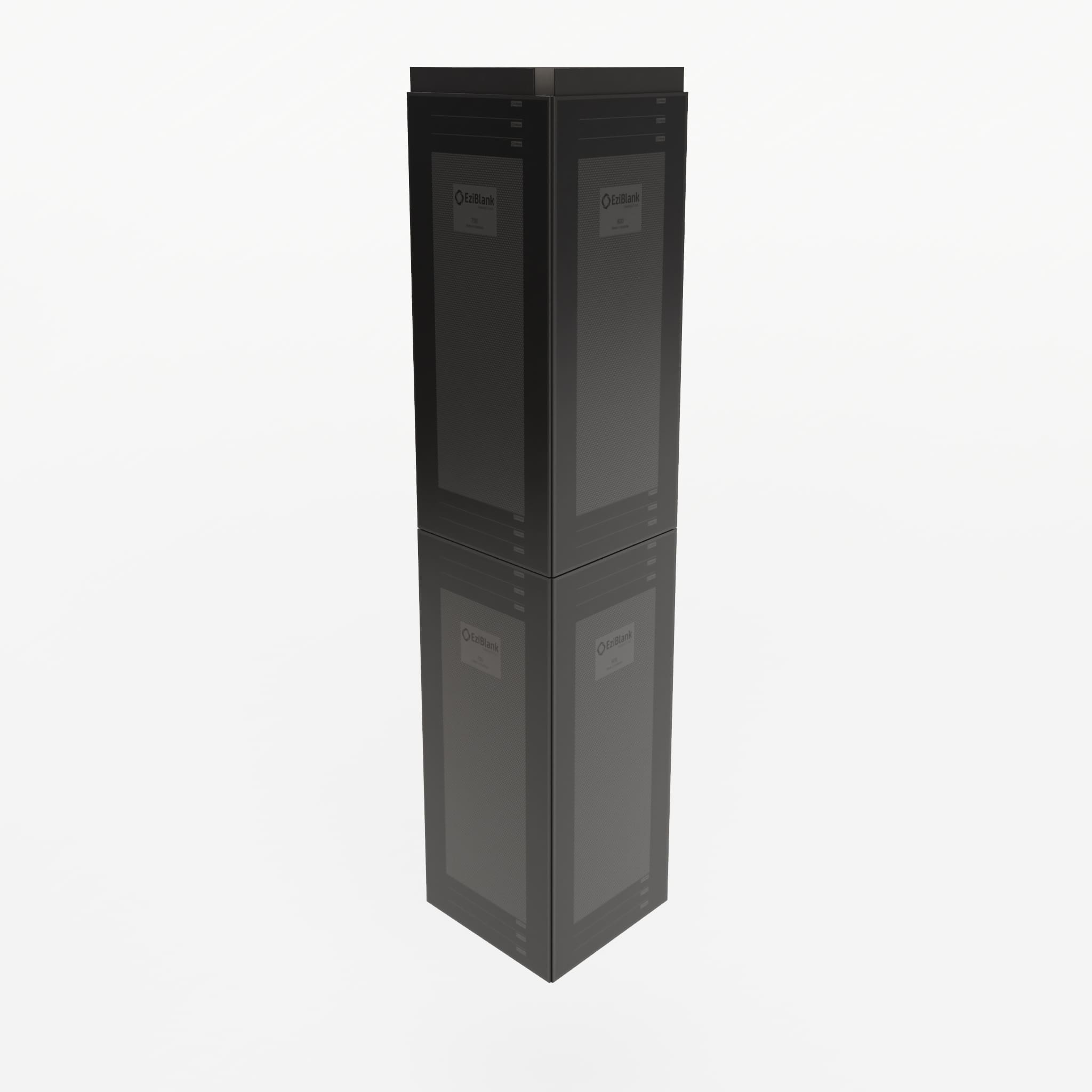
Data Center Thermal Compliance: ASHRAE, UL 94, and Audit Readiness
Data centre audits check two things related to airflow management: whether the facility maintains safe operating temperatures for the equipment, and whether the materials installed in the racks meet fire safety standards. Failing either one triggers audit findings, delays certifications, and in colocation environments, can result in SLA penalties.
This guide covers the thermal compliance frameworks that data centre operators need to meet, the product standards that matter for blanking panels and rack accessories, and how to prepare for audits before the auditor arrives.
For a full breakdown of ASHRAE, UL 94, NFPA, and Uptime Institute requirements, see the thermal compliance guide.
ASHRAE TC 9.9 Thermal Guidelines
The American Society of Heating, Refrigerating and Air-Conditioning Engineers (ASHRAE) publishes the most widely referenced thermal guidelines for data centre equipment through its Technical Committee 9.9.
The current guidelines define environmental classes for IT equipment. The most commonly referenced class is A1, which specifies:
- Recommended inlet temperature range: 18 to 27 degrees Celsius
- Allowable inlet temperature range: 15 to 32 degrees Celsius
- Recommended relative humidity range: 8% to 60% (dew point based)
The recommended range is where equipment operates most reliably and efficiently. The allowable range defines the wider envelope that equipment can tolerate without damage, but operating consistently at the allowable extremes increases hardware failure rates and shortens component life.
Auditors measure compliance against the recommended range, not the allowable range. If server inlet temperatures at any rack position consistently exceed 27 degrees or fall below 18 degrees, the facility may be flagged as non-compliant with ASHRAE best practices.
Blanking panels contribute to ASHRAE compliance by preventing the hot air recirculation that causes inlet temperature spikes. A rack with open U-spaces can experience inlet temperatures 5 to 10 degrees higher at the top than at the bottom due to hot air looping over from the exhaust side. Sealing those spaces with compliant blanking panels for data centers stabilizes inlet temperatures across the full height of the rack.
For a detailed breakdown of ASHRAE’s blanking panel guidance, see ASHRAE best practices for blanking panels.
Select the Right Airflow Panels for Your Compact Rack Configuration
-
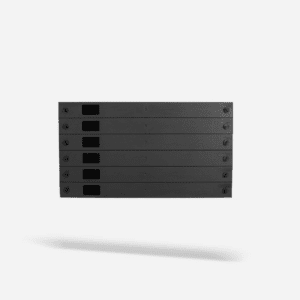
19″ 6RU Universal Blanking Panel
Price range: $186.00 through $200.00 AUD -
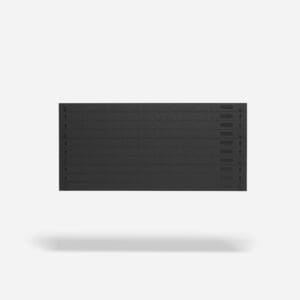
21″ 10SU Universal Blanking Panel for ETSI Rack
Price range: $240.00 through $250.00 AUD -
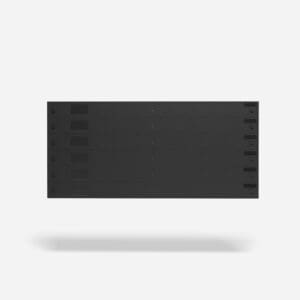
23″ 6RU Universal Blanking Panel
$250.00 AUD -
19” 6RU Standard Blanking Panel
Price range: $145.00 through $186.00 AUD -
New 19″ 6RU Universal Blanking Panel
UL 94 V-0 Fire Rating for Rack Materials
UL 94 is the standard for flammability testing of plastic materials published by Underwriters Laboratories. It classifies plastics by how quickly they self-extinguish when exposed to a flame source.
UL 94 V-0 is the highest rating for vertical burn testing. A material rated V-0 must self-extinguish within 10 seconds of the flame being removed, with no flaming drips that ignite the cotton indicator below the sample.
This rating matters for data centres because blanking panels, brush panels, and rack accessories made from plastic are installed in close proximity to electrical equipment. In the event of an electrical fire or arc flash, materials that do not self-extinguish quickly can contribute to fire spread.
All EziBlank blanking panels are manufactured from ABS plastic rated to UL 94 V-0. This rating is stamped on the product and documented in the product specification sheets. For full documentation, visit certifications and compliance documents.
For a deeper technical explanation of how flame-retardant ABS performs in data centre environments, see flame-retardant ABS and UL 94 V-0 ratings.
To see how UL 94 V-0 ratings fit into the broader picture of audit readiness and thermal standards, read the full thermal compliance guide.
NFPA 75 and NFPA 76
The National Fire Protection Association publishes two standards directly relevant to data centre fire safety:
NFPA 75 (Standard for the Fire Protection of Information Technology Equipment) covers fire protection requirements for IT equipment rooms, including construction, fire detection, suppression, and the materials permitted within the space. It requires that materials installed in the IT equipment area be non-combustible or listed as fire-retardant.
NFPA 76 (Standard for the Fire Protection of Telecommunications Facilities) applies similar requirements to telecom switching centres and carrier infrastructure.
Blanking panels made from UL 94 V-0 rated ABS meet the fire-retardant material requirements referenced in both standards. Metal filler plates are inherently non-combustible, but they introduce other risks (sharp edges, cage nut injuries) and do not carry a plastics fire rating because the test does not apply to metals.
During audits, inspectors may ask for documentation showing the fire rating of any plastic materials installed in the racks. Having UL 94 V-0 certificates and product spec sheets on hand speeds the audit process and avoids findings related to undocumented materials.
For guidance on how these certifications support ASHRAE and NFPA audit requirements, see the thermal compliance guide.
Uptime Institute and EN 50600
Uptime Institute Tier certifications (Tier I through IV) assess data centre design, construction, and operational sustainability. While the Tier standards do not prescribe specific airflow management products, they evaluate cooling system redundancy, capacity management, and operational practices. Facilities that demonstrate proper airflow management (blanking panels, containment, monitoring) score better in operational sustainability assessments.
EN 50600 is the European standard for data centre facilities and infrastructures. Part 2-3 covers environmental control, including temperature and humidity management. EN 50600 references ASHRAE thermal classes and requires that the facility maintain conditions within the specified ranges. Blanking panels and containment are referenced as baseline airflow management measures in the supporting guidance.
Compare your audit findings against ASHRAE inlet temperature ranges and UL 94 material requirements in the thermal compliance requirements guide.
Preparing for a Thermal Compliance Audit
Most audit findings related to airflow management fall into predictable categories. Addressing them before the auditor walks the floor saves time and avoids remediation orders.
Complete blanking panel coverage. Every unused U-space should be sealed. Partial coverage is the most common finding. Auditors will check multiple racks across the facility and note any open spaces. A single walk-through using the airflow audit checklist before the audit identifies gaps that need to be filled.
Material documentation. Have fire rating certificates and product specification sheets for every plastic material installed in the racks. For EziBlank products, these are available from the certifications page and can be provided to auditors as PDF downloads.
Temperature records. Maintain a record of server inlet temperatures over time. Continuous monitoring through a platform like EkkoSense provides the historical data that auditors look for. If continuous monitoring is not in place, periodic spot checks with documented readings are the minimum.
Containment integrity. If aisle containment is installed, check that all panels, doors, and ceiling baffles are in place and sealed. Containment that has gaps or missing components may be flagged as incomplete.
Cable management. Cables routed through open U-spaces or draped over rack tops obstruct airflow and may be cited as a deviation from best practices.