Frequently Asked Questions About Blanking Panels and Data Centre Airflow
Whether you are researching blanking panels for the first time or planning a full airflow management upgrade, the questions below cover the topics our customers ask about most. If you do not find what you are looking for here, contact the EziBlank team directly.
Blanking Panel Basics
What is a blanking panel?
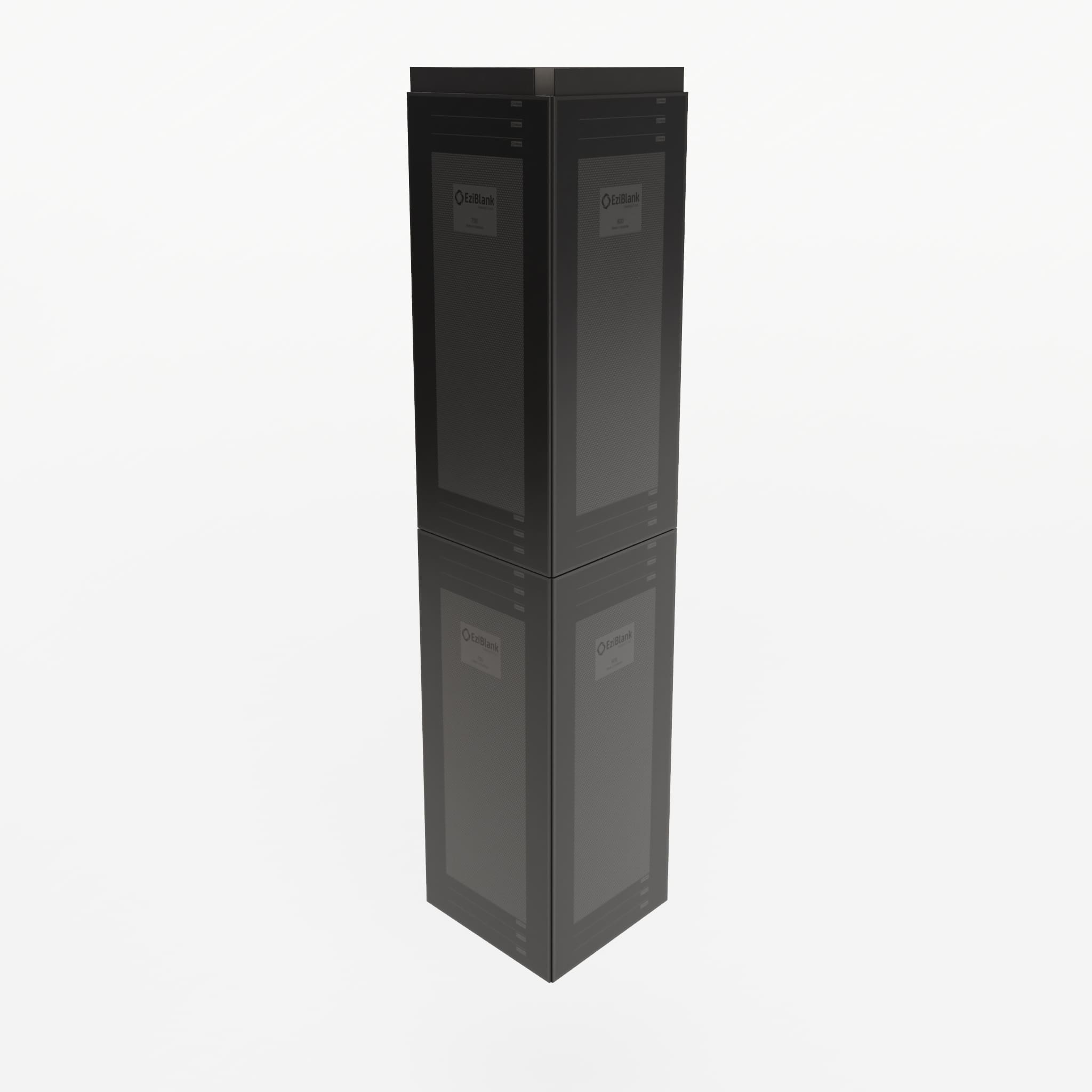
A blanking panel is a cover that seals unused rack units (U-spaces) in a server rack. Open rack spaces allow hot exhaust air to recirculate back into the cold aisle, raising inlet temperatures and forcing cooling systems to work harder. Blanking panels block this recirculation and maintain the front-to-back airflow pattern that data centre cooling depends on. For a full explanation, see blanking panels for server racks.
How do blanking panels work?
They create a physical barrier across unused rack openings. Cold air from the front of the rack passes through the installed equipment and exits as hot air at the rear. Without blanking panels, hot air loops over or through the open spaces and mixes with the cold supply. Blanking panels stop this loop and keep the two airstreams separated.
What is the difference between a blanking panel and a filler panel?
The two terms describe the same type of product. “Blanking panel” is the standard term in Australia, the UK, and Asia Pacific. “Filler panel” is more commonly used in North America. The practical difference is between traditional metal filler plates (mounted with cage nuts and screws) and modern modular panels like EziBlank (tool-free, snap-on, reusable). For a detailed comparison, see blanking panel vs filler panel.
Why are blanking panels important in data centres?
Every open rack unit is a source of cooling inefficiency. Hot air recirculation raises server inlet temperatures, increases fan speeds, shortens hardware life, and drives up energy costs. Blanking panels are one of the lowest-cost, highest-impact measures available for improving data centre thermal performance and reducing Power Usage Effectiveness (PUE).
EziBlank Products
What sizes do EziBlank blanking panels come in?
EziBlank panels ship as 6RU blocks (or 10SU for ETSI racks) that snap apart into individual 1U segments. This modular design lets you fill any size gap from a single panel type. Available widths are 19-inch (Standard and Universal), 21-inch (ETSI), and 23-inch. To see all panel types side by side, visit the blanking panel comparison.
What is the difference between Standard and Universal panels?
The Standard panel clips into square-hole rack rails only. The Universal panel uses a flexible mounting mechanism that fits square-hole, round-hole, and threaded-hole rails. If your facility has racks from multiple vendors with different rail types, the Universal panel is the safer choice. The price difference is modest.
What material are EziBlank panels made from?
All EziBlank blanking panels are made from flame-retardant ABS plastic rated to UL94-V0. This is the highest flammability rating for plastic materials, meaning the panel self-extinguishes within 10 seconds if exposed to a flame. This rating supports compliance with NFPA 75 and NFPA 76 fire safety standards.
Do I need tools to install EziBlank panels?
No. Every EziBlank panel uses a snap-on design that locks into the rack rail by hand. No screws, cage nuts, or tools are needed. A single technician can fill a 42U rack in under two minutes. For the full process, see the tool-free installation guide.
Are the panels reusable?
Yes. EziBlank panels snap in and out without damage. They can be repositioned, recombined into larger blocks, or stored for future use. There is no degradation from repeated installation and removal.
Rack Compatibility
Will EziBlank panels fit my racks?
The 19-inch panels fit any rack compliant with the EIA-310-D standard, which covers virtually all server rack manufacturers globally. The Universal model adds compatibility with round-hole and threaded-hole rails. The 21-inch panel fits ETSI-standard racks used in telecommunications. The 23-inch panel fits legacy 23-inch racks found in government, military, and broadcast environments.
Do EziBlank panels work with rear-mount rails?
EziBlank panels are designed for front-mount installation. They snap into the front vertical mounting rails of the rack. Rear rail compatibility depends on the specific rack design. For non-standard configurations, contact EziBlank about tailor-made solutions.
Airflow Management and Containment
Do I need aisle containment if I already have blanking panels?
Blanking panels and containment address different levels of the airflow management problem. Blanking panels seal gaps within individual racks. Aisle containment separates the hot and cold airstreams across entire rows. For high-density environments (above 10kW per rack), both are recommended. For lower-density server rooms, blanking panels alone may be sufficient. Learn more about aisle containment solutions.
What about cable cutouts and floor grommets?
Cable cutouts in raised floors are a common source of cold air leakage. KOLDLOK raised floor grommets seal around cable bundles passing through the floor, preventing cold air from escaping before it reaches the racks. Sealing floor leaks works alongside blanking panels to maximize the cooling air that actually reaches your equipment.
Energy Savings and ROI
How much energy can blanking panels save?
Industry research consistently shows that proper airflow management, including blanking panels, can reduce data centre cooling energy by 10% to 25%. The exact saving depends on how many open rack spaces exist, the current state of airflow management, and the efficiency of the cooling infrastructure. For a facility-specific estimate, use the ROI calculator.
What is the payback period for blanking panels?
For most facilities, blanking panels pay for themselves within 12 to 18 months through reduced cooling energy costs. The panels have no ongoing maintenance costs and typically outlast the racks they are installed in, so every year after payback is pure savings.
Compliance and Certifications
Do EziBlank panels meet fire safety standards?
Yes. All EziBlank panels are manufactured from UL94-V0 rated ABS plastic. This supports compliance with NFPA 75 (Standard for the Fire Protection of Information Technology Equipment) and NFPA 76 (Standard for the Fire Protection of Telecommunications Facilities). For full documentation, see certifications and compliance.
Do blanking panels help with ASHRAE compliance?
ASHRAE recommends maintaining server inlet temperatures between 18 and 27 degrees Celsius (A1 class). Blanking panels help maintain these ranges by preventing hot air recirculation that causes inlet temperature spikes. They are a baseline measure referenced in most data centre thermal management frameworks.
Ordering and Shipping
Does EziBlank ship internationally?
Yes. EziBlank products are deployed in data centres across 19+ countries. The company operates from Sydney, Australia and ships globally through its distribution network. Contact the team for international pricing and lead times.
How do I calculate how many panels I need?
Count the total open U-spaces across your facility. Divide by 6 (each EziBlank panel covers 6RU). That gives you the number of panels to order. For example, 200 racks with an average of 10 open U-spaces each equals 2,000U, which requires approximately 334 panels.
Can I get a bulk or project quote?
Yes. For orders covering more than a handful of racks, contact EziBlank for project pricing. The team can also help with quantity planning based on your facility’s rack count and layout.
shop our range
-
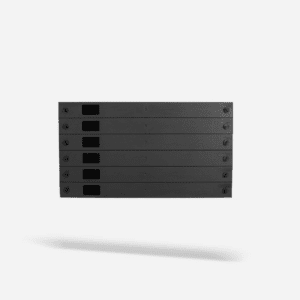
19″ 6RU Universal Blanking Panel
Price range: $186.00 through $200.00 AUD -
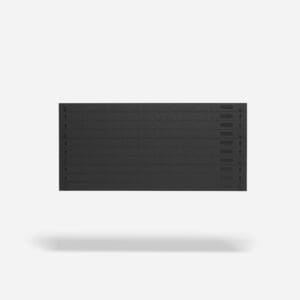
21″ 10SU Universal Blanking Panel for ETSI Rack
Price range: $240.00 through $250.00 AUD -
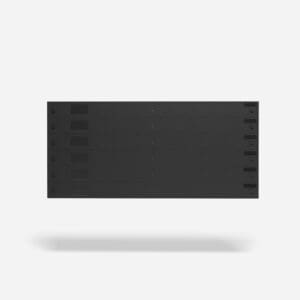
23″ 6RU Universal Blanking Panel
$250.00 AUD -
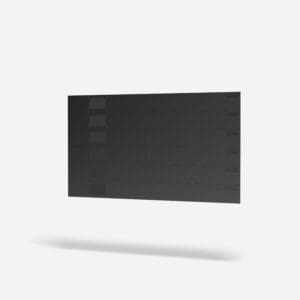
19” 6RU Standard Blanking Panel
Price range: $145.00 through $186.00 AUD -
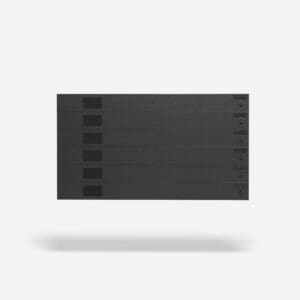
New 19″ 6RU Universal Blanking Panel